Across traditional Japanese architecture, Noh theater, bamboo flute music, and monochrome ink painting (水墨画, Suibokuga), there runs a quiet structural principle known as Ma (間). The character is traditionally read as a gate (門) with the sun (日) showing through it. Ma is often translated as "negative space" or "interval", but in lived experience it is the fertile stillness that lets everything else resonate.
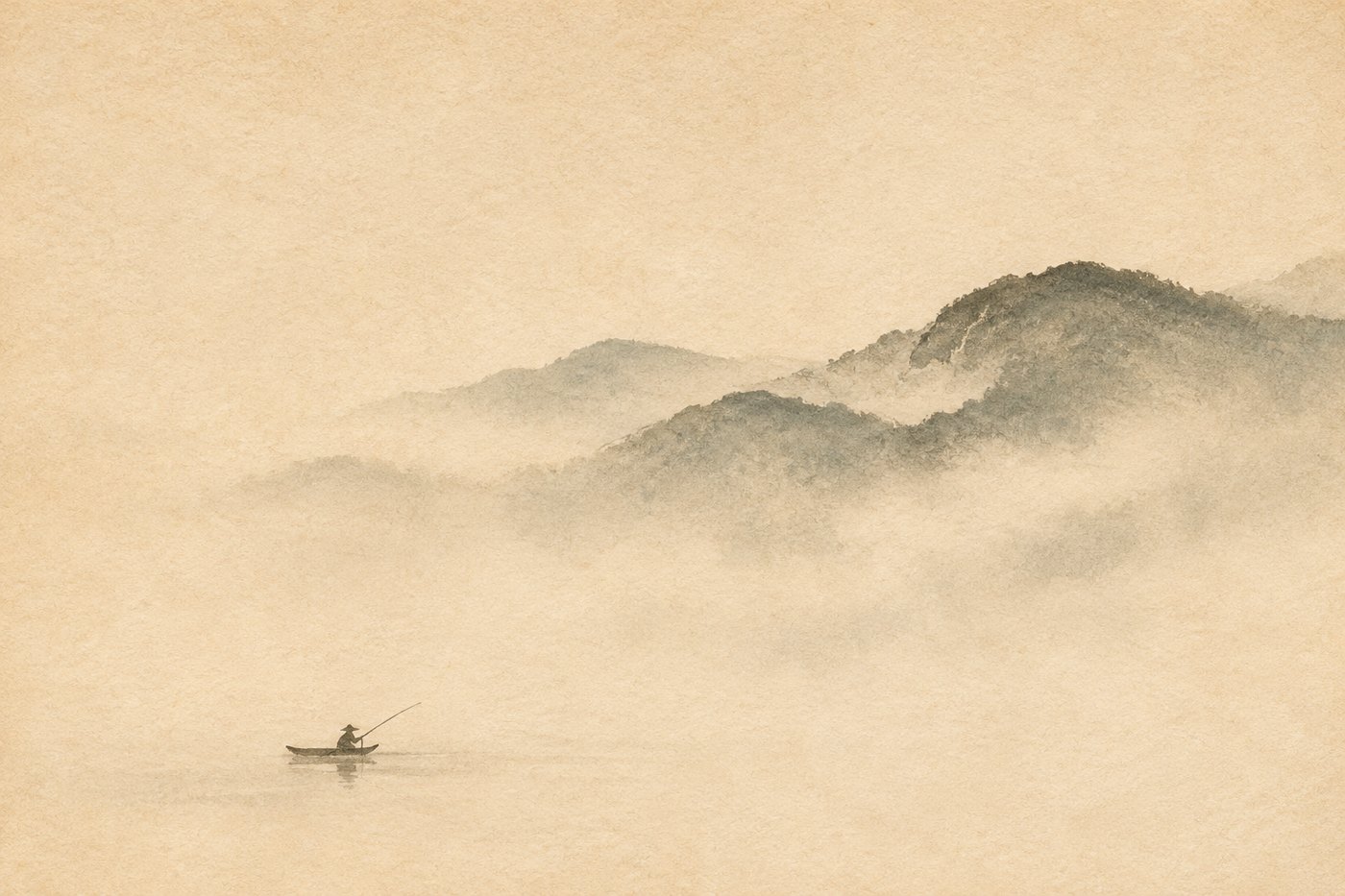
When travelers first view the landscape scrolls of Muromachi-period master Sesshū Tōyō (雪舟等楊), they are often surprised by how much of the aged silk or washi is left untouched by ink. A few decisive brushstrokes suggest a distant mountain peak and a lone fisherman’s skiff, while the vast unpainted expanse becomes morning mist, sky, and quiet water.
I. Why Unpainted Silk Speaks Louder Than Crowded Ink (描かれない余白が語るもの)
If an anxious painter covered every square inch of the scroll with trees, rocks, and buildings, the viewer’s eye would suffocate; there would be nowhere for the imagination to walk. In the same way, when a master plays the bamboo shakuhachi flute, the silence between two notes is held with the exact same intensity as the breath blown through the reed. Without the pause, melody collapses into mere noise.
“It is the silence between our words that carries the deepest affection, and the unhurried rest between our labors that gives our work its dignity.”
Modern culture treats every empty space as a defect waiting to be monetized or filled. If there is a three-minute wait at a train platform, we fill it with a feed; if there is an open Saturday afternoon on the calendar, we pack it with errands; if a conversation pauses for four seconds, we rush to fill the air with chatter. We paint over the mist until the mountain disappears.
II. Restoring Spatial and Temporal Margins at Home (暮らしの中に「間」を取り戻す)
When a household or a human mind loses all of its Ma, small irritations echo loudly because there is no acoustic buffer to absorb them. Exhaustion rarely comes from the one meaningful task we care about; it comes from removing the transitional pauses that let one experience settle before the next begins.
Architects of traditional Kyoto townhouses (京町家, Kyō-machiya) always placed a tiny open-air courtyard garden (坪庭, Tsuboniwa) at the center of the narrow wooden building. That small square of moss, stone, and sky produced nothing commercial, yet it brought light, breeze, and seasonal awareness into every surrounding room.
III. The Courage to Leave Part of the Scroll Unpainted (予定を詰め込まない勇気)
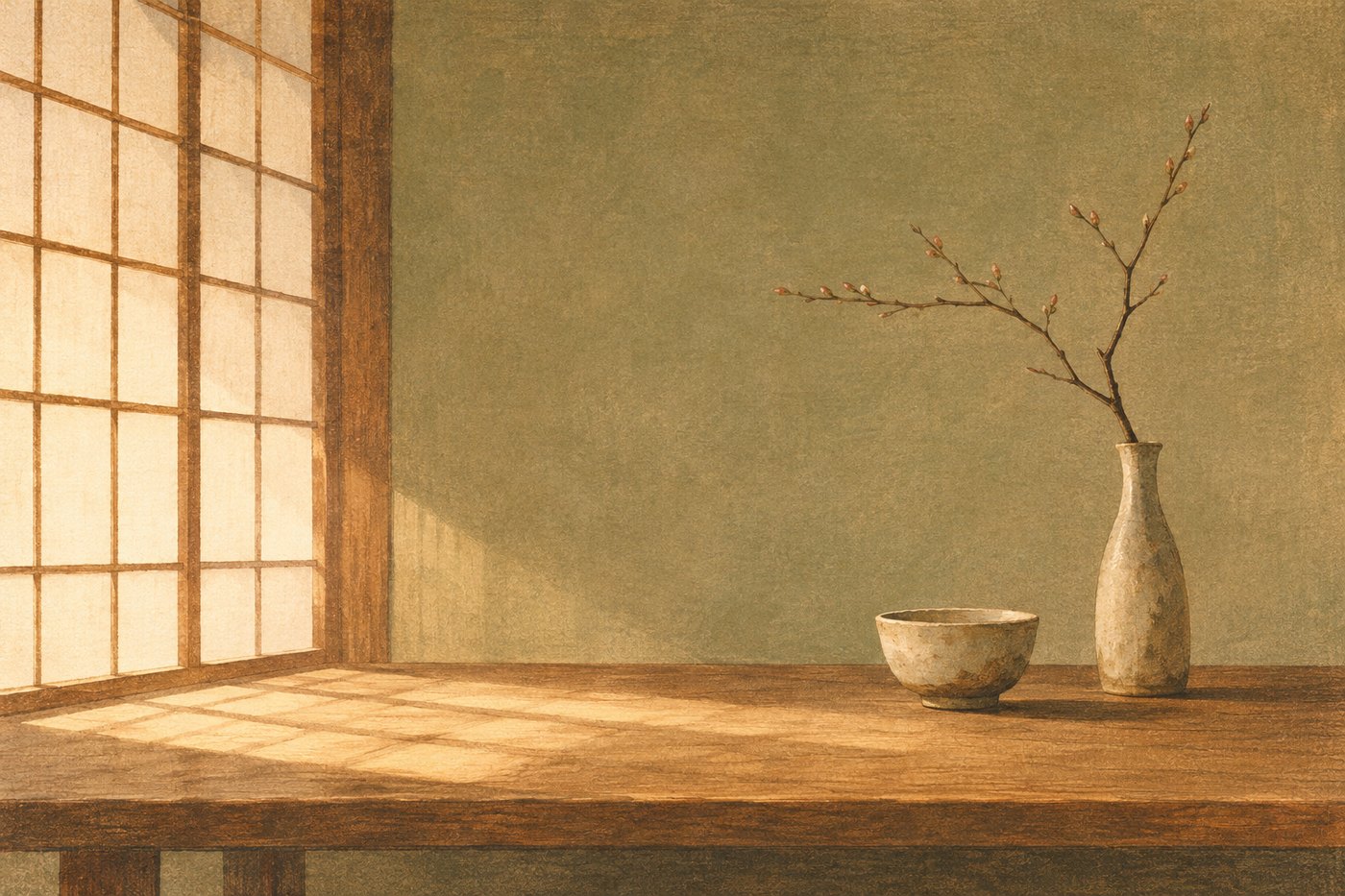
When we examine why we overfill our calendars, we often discover a subtle fear of stillness: if we stop moving, we might have to listen to our own deeper questions. Laozi made the same point about a bowl and a room long ago: what makes them useful is the hollow. Our days work the same way. They become meaningful when we leave open room for wonder, unhurried conversation, and rest.
Cultivating Your Weekly Tsuboniwa (一週間にひとつの「余白」を守る)
Choose one physical surface in your living room and clear ninety percent of the objects from it, leaving only a single ceramic bowl or branch. Then choose one two-hour block this Sunday and guard it as unpainted silk—no obligations, no errands, and no screens—so your spirit has room to catch up with your body.