The four-circle diagram that fills social media feeds—what you love, what you are good at, what the world needs, what you can be paid for—is not Japanese. It was drawn in Spanish by an Argentine astrologer named Andrés Zuzunaga in 2011, with the word propósito (purpose) at its center. In May 2014, a British blogger named Marc Winn watched a TED talk about Okinawan longevity, saw Zuzunaga's chart, and replaced the center word with "ikigai." The image went viral. Winn has since acknowledged, in multiple published accounts, that his contribution was changing one word on someone else's diagram.
The real ikigai is older, broader, and smaller than the diagram suggests. It is not a career diagnostic. It is not a Venn diagram. And for the people who actually live it—Japan's oldest residents, many of them past eighty—it is rarely a grand purpose at all.
I. What Ikigai Actually Means (生き甲斐の本当の意味)
Ikigai (生き甲斐) compounds two words: iki (life, alive) and gai (value, worth). In ordinary Japanese, the word is expansive. It can mean a reason for getting up in the morning, a source of joy, a role that makes you feel needed. A grandmother might say her grandchild is her ikigai. A retiree might say his morning walk is his ikigai. Several forms can coexist, and their importance can shift across a lifetime.
The modern scholarly discussion begins with Mieko Kamiya, a psychiatrist who published Ikigai ni tsuite ("About Ikigai") in 1966. Her study focused on people with leprosy—patients whose social roles had been stripped away—and she found that the sense of life's worth did not disappear with status or health. It relocated: to relationships, to small daily acts, to the feeling of being useful to someone. Her work remains one of the most cited in ikigai research.
In Japanese usage, ikigai is often something small and everyday. It need have nothing to do with career, income, or a grand life purpose. This is the first thing the four-circle diagram gets wrong: it frames ikigai as a intersection of four external conditions, when the Japanese concept is typically an internal, modest, daily experience.
II. The Problem Is Structure, Not Meaning (意味ではなく構造の問題)
Japan has the oldest population on earth and has been living with the question of purpose in later life for a generation. The research is extensive, and its finding is consistent: ikigai is reported most by people who have somewhere to be, someone who expects them, and something with their hands to do.
Meaning follows structure, not the other way round.
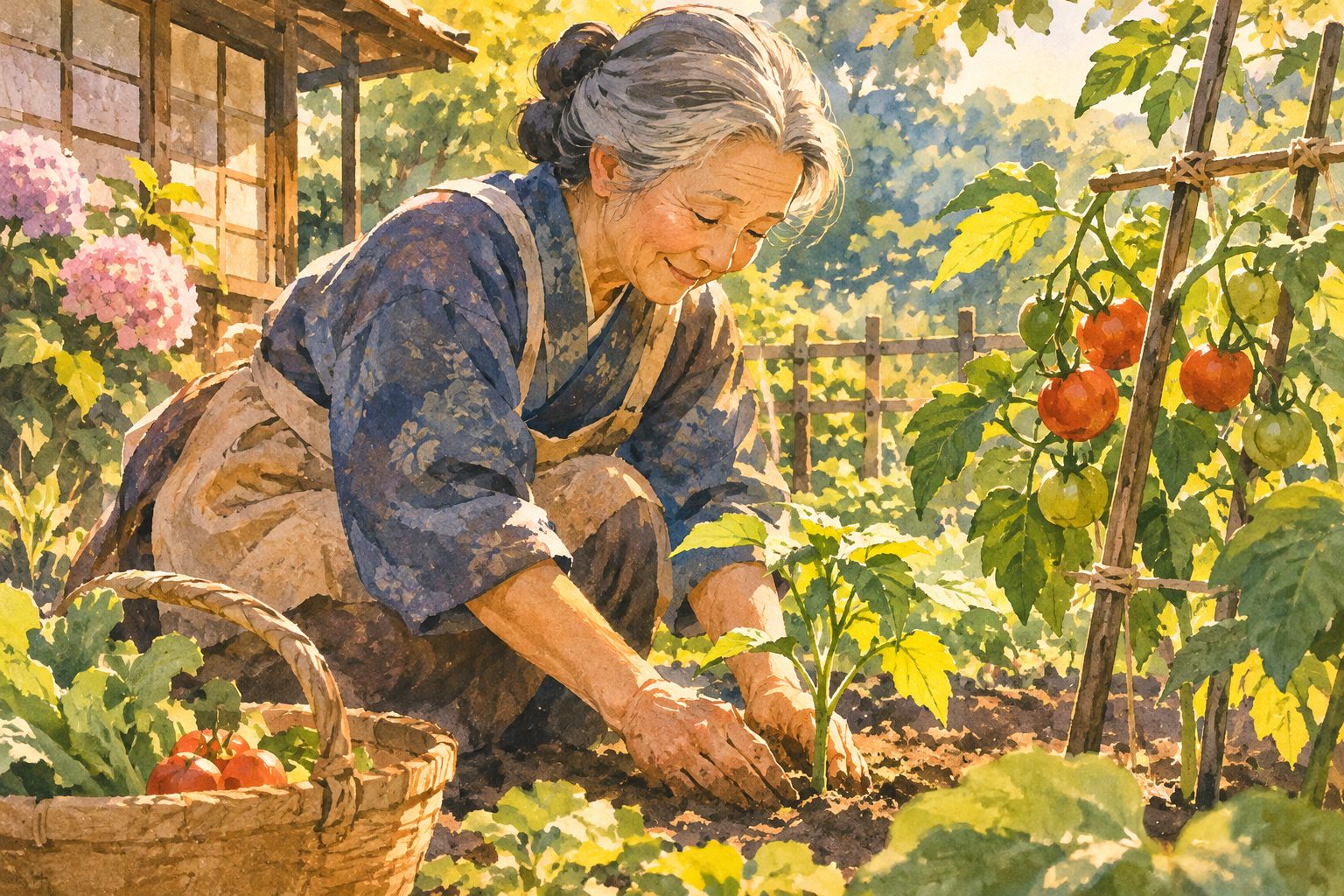
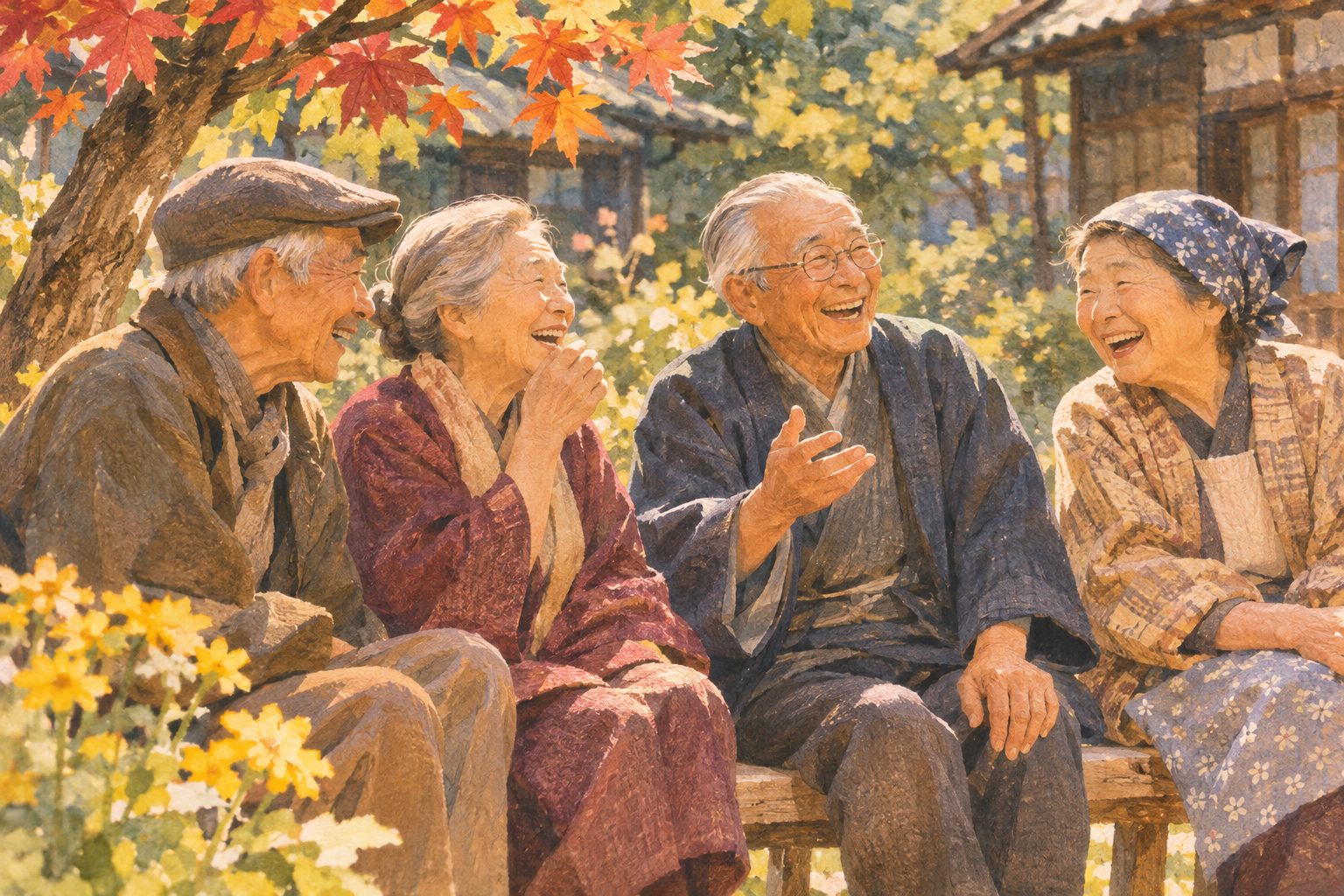
A salaried life supplies all four at once: a place to go, people to see, someone who notices if you are absent, and a task that must be done. Retirement removes all four on the same Friday. The result is not a philosophical crisis—it is a logistical one. The people who fare best are not those who find a new "purpose"; they are those who rebuild a structure: a vegetable patch that needs watering every morning, a group that meets on Thursdays and would notice if you did not come, a grandchild to pick up from school twice a week.
Nobody in these studies reports that their ikigai is "to make the world a better place." They report that it is the tomatoes, or the Thursday group, or the grandson's lunch.

III. Three Questions Japan's Elders Actually Ask (日本の高齢者が実際に問う三つの質問)
When researchers ask Japanese elders about ikigai, the questions that produce useful answers are not "What is your purpose?" but three smaller ones:
Who expects you? Not loves you—expects you. A standing appointment, a role in a group, an animal that needs feeding, a plant that will wilt. Something that goes wrong if you do not show up. The word "expects" is deliberate: love is unconditional, but expectation creates structure.
What do your hands do? Elderly Japanese people with a daily manual task—cooking, gardening, mending, making—report higher ikigai than those without, across every income level. The task matters less than the fact of it. Hands that work are hands that belong to a day.
What is on the calendar? Not "What are your goals?" but "What is happening next month?" A trip, a harvest, a performance, a festival, a visit. Ikigai is often described in Japan as something to look forward to, and the people who have it can usually tell you the date.
IV. Starting From Nothing (何もないところから始める)
If the answers to all three questions are "nobody, nothing, and nothing," do not begin by searching for a purpose. That search, for someone who has lost their structure, can feel like another form of exhaustion.
Instead, put one thing on the calendar that requires you. A class is the classic move: it supplies all three answers at once—a teacher who notices when you are absent, a thing to do with your hands, and a next session on a specific date. A volunteer shift with fixed hours does the same. So does agreeing to grow something for somebody else.
What ikigai is not: it is not a second career (unless you want one), not a bucket list, not the discovery of the one thing you were put on earth to do. The oldest people in Japan are not doing that. They are watering the garden and going to the Thursday group, and they will tell you, if asked, that this is enough—and that it is what keeps them here.
This essay connects to the folklore of Ubasute, where abandonment of the elderly is met with moral reckoning, and to the classical parables that teach the release of what no longer serves us. The thread is the same: in later life, meaning is not found in addition but in attention—to what is already here, already waiting for you.
The oldest people in Japan do not ask what their purpose is. They ask what time they need to be somewhere.