The Eraser and the Sewing Thread: How Japanese Shitsuke Teaches Children to Repair Mistakes
I. The Panic Over a Crooked Line (ノートの上の小さな嵐)
Watch a seven-year-old sit at a kitchen table practicing handwriting or arithmetic, and you will often witness a small, sudden storm. The pencil slips; a character comes out lopsided, or a sum is written in the wrong column. Before the parent has said a single word, the child’s shoulders tense. Sometimes they press the eraser so hard against the page that the paper tears; sometimes they crumple the entire worksheet or push the notebook away in tears, convinced that a single blemish has ruined the whole afternoon’s effort.
Children are not born believing that a mistake is a permanent verdict on their character. They absorb that fear from the atmosphere of the adult world—from the sigh we let out when we drop a plate, from the way we rush to hide our own errors, or from the subtle impatience in our voice when a task takes longer than planned. When a child equates making a mistake with losing love or respect, their instinct is either to freeze or to conceal the damage.
II. What the Kimono Tailor Knows About Shitsuke (和裁の「しつけ糸」が教えてくれること)
In Japanese, the word commonly translated as "discipline" or "upbringing" is shitsuke (躾)—a uniquely Japanese character ( kokuji ) formed by combining "body" (身) and "beauty" (美). Yet long before the word was used by educators or parents, shitsuke belonged to the quiet world of traditional kimono sewing ( wasai ).
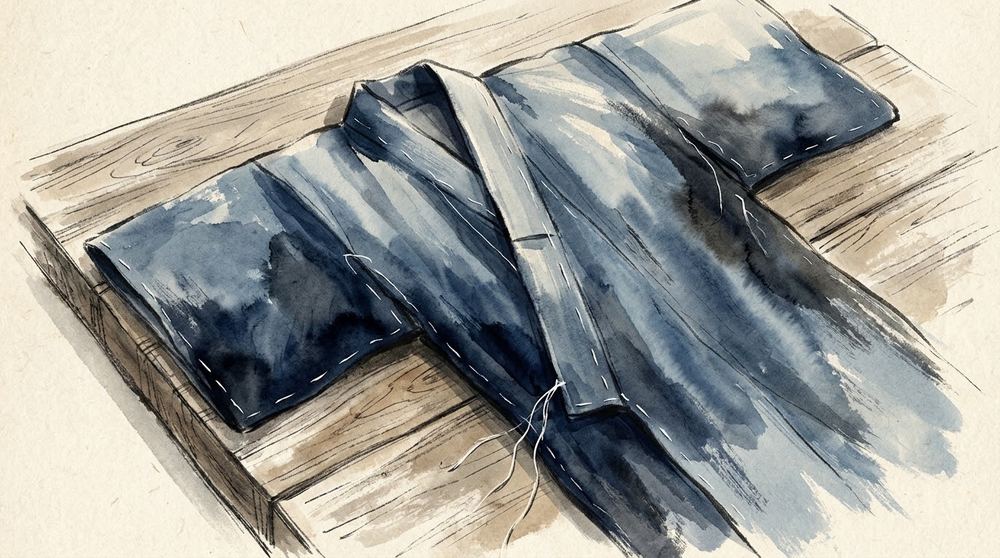
When a seamstress sews a kimono from bolts of silk or indigo cotton, the fabric is too supple to hold its crisp, straight folds on its own right away. Before the garment is worn, the tailor runs long, loose stitches of white cotton basting thread—called shitsuke-ito (しつけ糸)—along the hems, sleeves, and collar. These temporary stitches do not pinch or punish the cloth. They simply hold the layers in gentle alignment while the fabric settles into its natural shape. Once the garment is ready to be worn out into the world, the basting thread is pulled out and set aside, leaving no scar behind.
When our ancestors borrowed this sewing term for raising children, they left us a remarkably tender definition of guidance. Shitsuke was never meant to be a permanent iron cage of rules, nor was it meant to shame a child who slips out of alignment. Like basting thread, parental guidance is a temporary, supportive stitch—there to help a growing person find their form, and meant to be gradually removed as they learn to hold themselves steady.
III. The Afternoon With the Wooden Sewing Box (裁縫箱を開く午後のひととき)
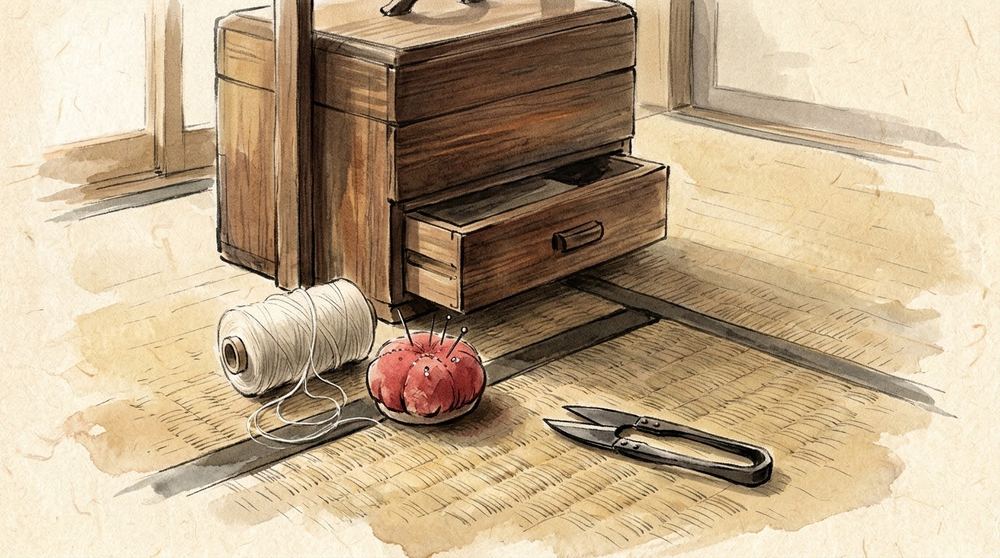
How, then, do we teach a child not to fear their own missteps? We move the conversation from judgment to repair. In many Japanese homes, a small wooden sewing box ( haribako ) still sits in the corner of the living room shelf, holding spools of thread, a red pincushion, and small iron shears.
When a child comes home with a torn strap on their canvas school bag, a missing button on a smock, or a stuffed animal whose seam has split during rough play, a parent has two choices. We can scold them for being careless and silently buy a replacement, which teaches the child that broken things are shameful and disposable. Or we can open the haribako after snack time, thread a needle together, and let the child help hold the cloth while the seam is stitched back into place.
A child who watches a tear being mended—and eventually learns to pass the needle through the fabric with their own fingers—discovers a profound relief: things that come apart can be put back together. The frayed strap is no longer evidence that they are a "bad" or "clumsy" child; it is simply a seam asking for five quiet minutes of attention.
IV. The Rubber Eraser as a Tool of Courage (消しゴムという「やり直すための道具」)
The same philosophy transforms what happens at the study desk. In the early grades of Japanese elementary schools, teachers often pay as much attention to the small white rubber eraser ( keshigomu ) in a child’s pencil case as to the pencils themselves. A child who is terrified of being wrong writes with timid, barely visible pressure, or refuses to start a sentence until they are certain it is flawless.
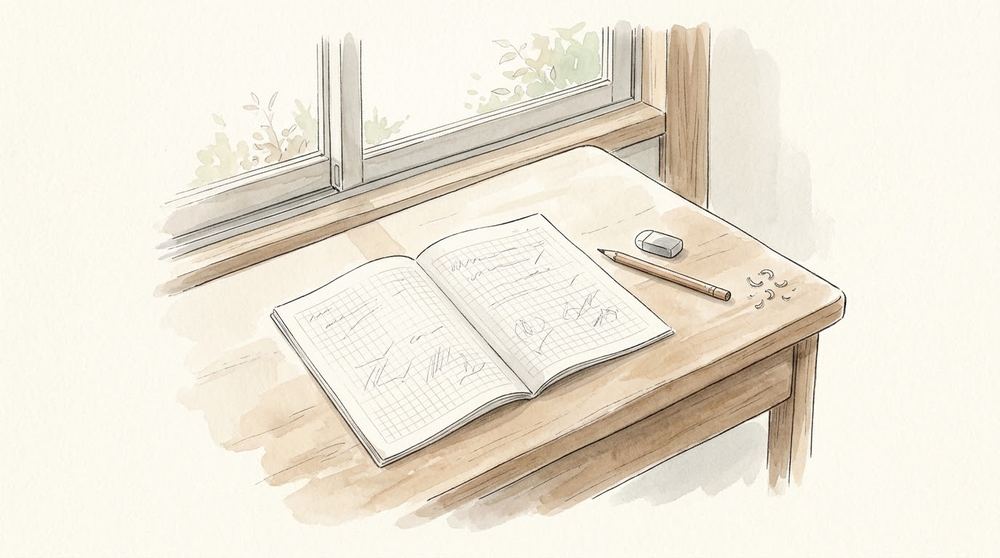
When we sit beside a child who has written a crooked character, our most helpful response is rarely a lecture on focus. Instead, we can show them how to hold the paper steady with two fingers of the non-writing hand, rub the mistake cleanly away with unhurried strokes, brush the little roll of eraser shavings ( keshikasu ) neatly to the corner of the desk, and write the line again on the fresh white space.
By treating the eraser not as an instrument of shame, but as an ordinary, respected partner to the pencil, we normalize the act of revision. We show the child that learning is not a tightrope walk where one slip ends the performance; it is a workshop where drafting, erasing, and re-stitching are the natural rhythm of the craft.
V. Pulling Out the Basting Thread
As the years pass, the greatest gift of shitsuke is watching a child internalize the calm hands of the repairer. When a teenager forgets an assignment, speaks sharply to a sibling, or misjudges a commitment, they no longer need to hide the tear in the back of a closet or collapse into self-reproach. Because we sat with them over torn bookbags and erased notebook pages without raising our voice, they know how to reach for their own thread. They apologize plainly, mend what was frayed, and continue walking—held steady by a quiet confidence that no longer needs our visible stitches to keep its shape.