In the classical philosophical writings of Mencius (孟子, Mōshi), preserved for over two millennia as the four-character idiom Batsubyō Jochō (揠苗助長), there is a haunting parable of a farmer from the state of Song who loved his young rice paddy—yet could not bear the slow pace of nature.
Every morning in May, the farmer walked out to the earthen dikes and measured his green rice seedlings against those in his neighbor’s field. Anxious that his shoots were growing a fraction of an inch slower, he finally waded barefoot into the mud one afternoon and gently tugged every single stem upward by an inch.
I. The Tragedy of the Hurried Harvest (苗を引っ張って枯らしてしまう愚かさ)
Returning home exhausted and covered in mud, he announced proudly to his family: "Today I am worn out, for I have helped all our young rice plants grow taller!" Alarmed, his son ran out to the paddy as the evening sun set—and found every seedling across the entire field yellowing and withered, its delicate white hair-roots torn from the nourishing soil.
“We cannot pull a child into maturity by comparing them to the neighbor’s field; we can only warm the soil and water the unseen roots of character.”
Whenever modern parents read this ancient story, a quiet recognition stirs in the chest. Surrounded by developmental milestones, standardized rankings, and curated social feeds showcasing other children’s trophies, even the most loving mother or father can feel the farmer’s panic rising in their throat.

II. Tending the Unseen Underground Architecture (土の下の見えない「心の根」を育てる)
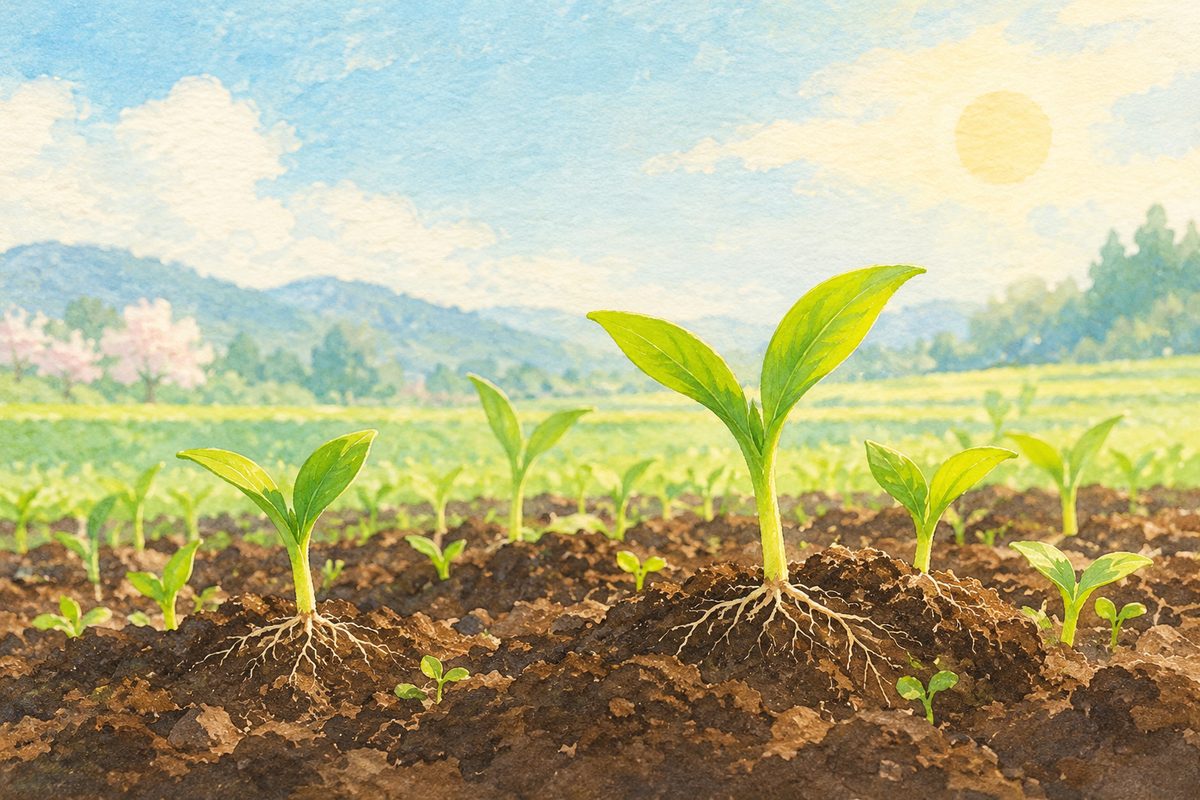
In arboriculture and farming, before a young sapling or rice shoot pushes visible leaves toward the sky, it spends months directing almost all of its energy downward into the dark earth. It builds an unseen root system capable of drawing water during summer droughts and anchoring the trunk during autumn storms.
In childhood, those unseen underground roots are emotional security, curiosity, honesty, empathy for a struggling classmate, and the quiet confidence that one is loved even after making a mistake. None of these roots show up on a second-grade report card—yet by age twenty-five, they determine whether a young person flourishes with resilience or wilts under pressure.
III. Protecting Childhood From the Fever of Early Comparison (「よその田んぼ」と比べない勇気)
Every tree in a mountain forest has its own calendar of blossoming: the plum opens in February snow, the cherry in April breeze, the lotus in July heat, and the chrysanthemum in October frost. A child who blooms more slowly in arithmetic or public speaking is often quietly growing deep, compassionate roots that will shelter many others later in life.
Three Ways to Water the Roots This Week (今週できる「心の根」への水やり)
This week, refrain from comparing your child’s pace with any sibling, classmate, or cousin. Instead, water their unseen roots in three quiet ways: thank them warmly when they tell a difficult truth, sit beside them without taking over when they wrestle with a hard puzzle, and remind them at bedtime that your delight in their existence never depends on a trophy or a test score, because strong roots always reach the sunlight in their own rightful season.