I. The Wrong Ruler: What Happens When We Measure a Child’s Growth Only by What Shows (竹の地下茎と、月曜日の朝のため息)
II. The Bamboo Shoot and the Carpenter’s Stick (手捏(てづく)ねの茶碗に竹尺を当てる愚かさ)
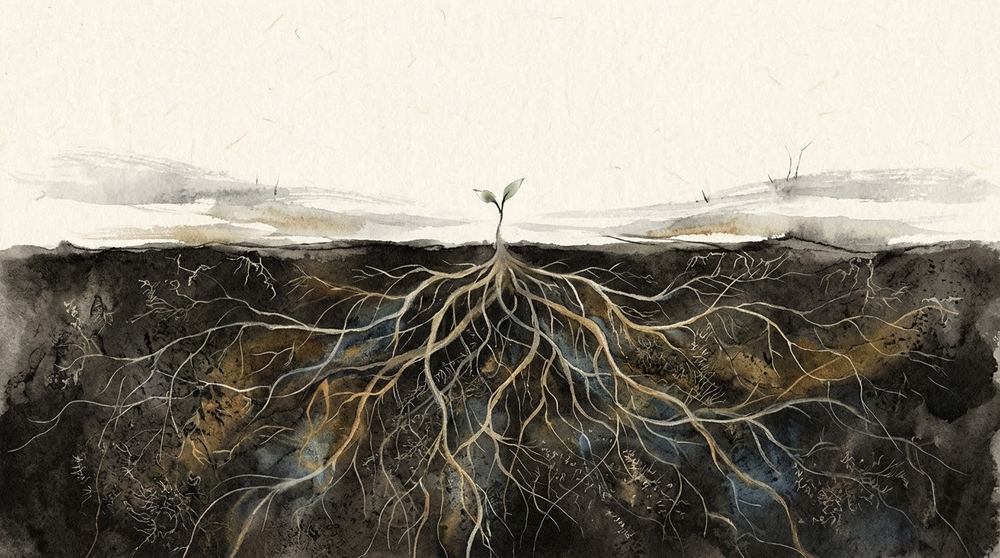
There is a well-known botanical observation often cited in East Asian parables: for the first several years after a moso bamboo rhizome settles into the earth, almost nothing appears above the soil save a modest shoot, because the plant is spending its seasons weaving an underground lattice of roots that will eventually support sixty feet of height in a single spring. Most parents who hear that image feel a momentary warmth—until Monday morning arrives, a report card or developmental checklist lands on the kitchen table, and we immediately pick up a carpenter’s ruler to measure how many millimeters our child grew since last Tuesday.
The hardest part of modern parenting is rarely a lack of love; it is our addiction to visible, linear metrics. From the week a child is born, we are handed charts: percentiles for weight, month-by-month checklists for first words, reading levels, swim-class badges, and test rankings. Numbers are seductive because they offer an anxious parent the illusion of certainty. If the number goes up, we feel we are doing our job; if our child sits two steps behind the neighbor’s child on the chart, a quiet panic sets in.
III. What Happens When You Measure a Clay Bowl With a Straightedge (倉橋惣三が説いた「自己充実」という時間)
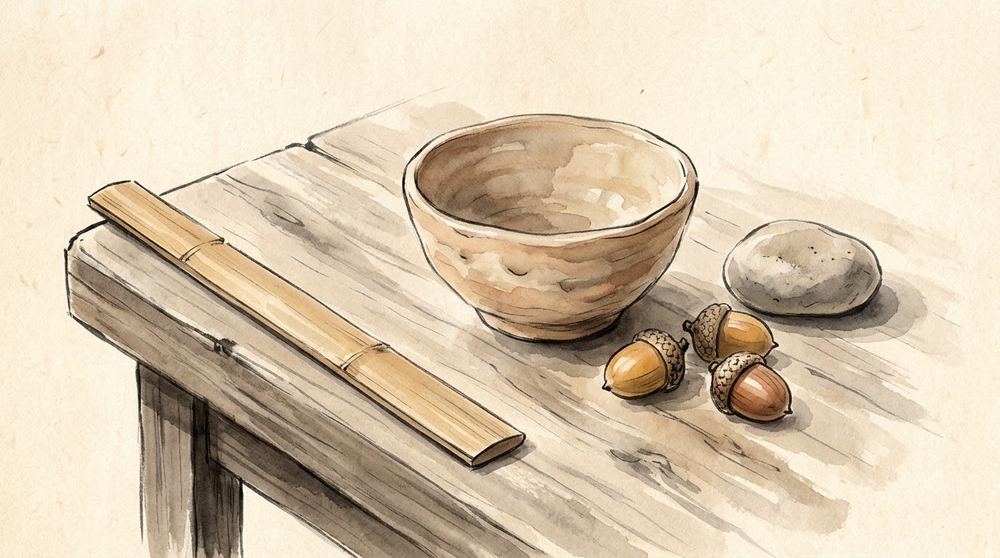
In traditional Japanese carpentry, the bamboo ruler ( takezashi ) is an indispensable tool for cutting a straight beam. Yet no potter would ever lay a straight ruler against the side of a hand-formed tea bowl to judge whether the vessel is good. A straightedge can only tell you that the curve of the bowl is not a flat plank; it has no vocabulary for warmth, balance, depth, or how the clay rests in the palm.
When we judge a child’s ontwikkeling almost entirely by standardized scores or age-graded comparisons with classmates, we are laying a flat carpenter’s stick against a living vessel. A test score can measure how quickly a nine-year-old recalls multiplication tables under a twenty-minute timer. It cannot measure the fact that the same child noticed a classmate sitting alone at lunch and quietly moved their chair over. It cannot measure the twenty minutes they spent on the balcony watching a beetle climb a flowerpot, or the courage it took for a shy child to raise their hand even once when they did not know the answer.
When the only questions we ask at dinner are about grades, rankings, and visible achievements, we teach a child a dangerous lesson: only the parts of you that can be counted count. Slowly, a child learns to abandon their quiet curiosities—the slow, crooked, ungraded interests that actually form the root system of an original adult mind—in order to produce quick, measurable numbers that keep their parents calm.
IV. Kurahashi Sōzō and the Fullness of Today (柱の傷と、目に見えない季節)
In the early twentieth century, as Japan rapidly modernized its school system along competitive industrial lines, the educator and psychologist Kurahashi Sōzō (1882–1955)—often called the father of modern Japanese early childhood education—sounded a gentle warning. Serving for decades at the Tokyo Women’s Higher Normal School Kindergarten (now Ochanomizu University Kindergarten), Kurahashi watched adults turn childhood into a mere rehearsal hall for future exams.
In his classic essays SodateのKokoro (The Heart of Nurturing), Kurahashi argued that the true foundation of a child’s future strength is jiko jūjitsu (自己充実)—allowing a child to experience the unhurried fullness of their own life today, rather than constantlystretching them toward an external adult yardstick. When a child is absorbed in building a mud dam in the garden yard, or spending forty minutes trying to tie a knot by themselves, nothing on a standardized chart moves upward that afternoon. Yet beneath the surface, the child’s capacity for concentration, frustration tolerance, and quiet self-trust is thickening in the dark.
In many old Japanese homes, there is a wooden pillar ( hashira ) near the hallway where parents mark their children’s height once a year with a small horizontal notch or pencil line. If you look closely at one of those pillars after twenty years, you notice something instructive: the spaces between the lines are never equal.
There are years when a child shoots up three inches in a single summer, and there are quiet winters when the pencil mark barely moves a fraction of an inch above the previous year’s line. No sensible parent looks at a slow year on the wooden pillar and concludes that the child is failing at growing. We understand intuitively that the body alternates between seasons of outward extension and seasons of inward consolidation.
Why, then, do we deny that same rhythm to a child’s mind and heart? Emotional maturity, reading comprehension, courage, and kindness do not grow like a factory conveyor belt at two percent per month. A child may seem to plateau for six months—repeating the same mistakes, clinging to the same fears—while an invisible reorganization is taking place inside them, only to surprise us on an ordinary autumn morning with a sudden leap in understanding.
V. Choosing a Kinder Measure
Putting down the wrong ruler does not mean ignoring our children’s struggles or refusing to help them learn. It means expanding what we choose to notice and honor aloud at the end of the day.
Next time you are tempted to compare your child’s pace with a cousin’s, a classmate’s, or an anonymous chart on a screen, pause and ask three quieter questions instead:
- How do they recover? Compared with six months ago, when they are disappointed or frustrated, do they find their footing a little more gently?
- What holds their unforced attention? What is the one subject, craft, bug, book, or question they return to when no adult is grading them?
- Are they still glad to show you what they made? When a child brings a lopsided drawing or a half-finished idea to the kitchen table, their eyes are asking whether your love is a ruler or a shelter. Put the straightedge back in the drawer, look at the work they actually brought you, and let the underground roots take the time they need.