I. The Pull-Cord Click (豆電球を消したあとの静けさ)
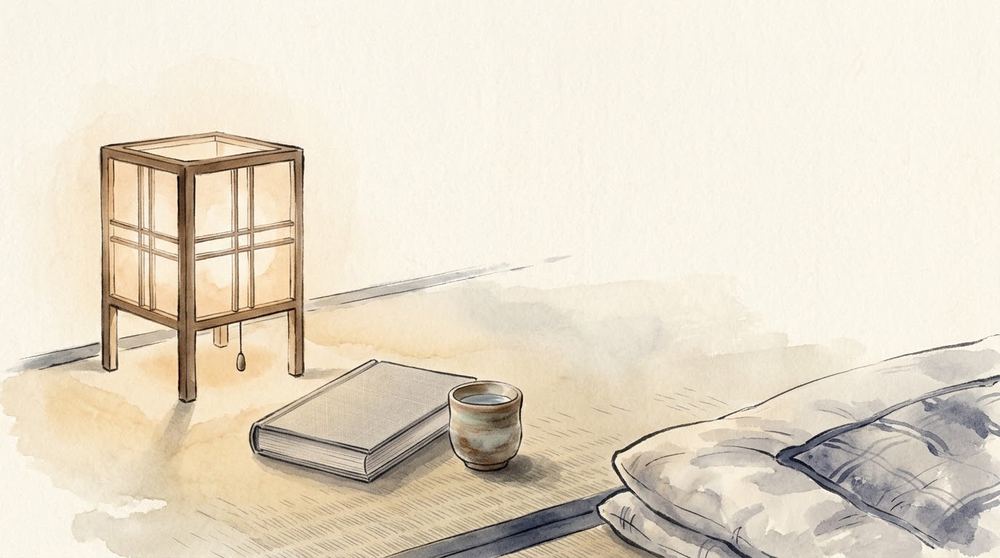
Every parent knows the temptation of the doorway. By nine o’clock in the evening, the dishes have been rinsed, the school forms signed, the bathwater drained, and the pajamas buttoned. When you finally pull the cord on the bedside lamp and hear its small metallic click, a part of your mind is already halfway down the hall—thinking of the unanswered messages on your phone, the laundry waiting to be folded, or the first quiet hour you have had to yourself since dawn.
Yet if you do not stand up right away—if you stay lying on the futon or sitting on the edge of the mattress for just ten unhurried minutes after the room goes dark—something remarkable happens. In the first two minutes, there is only the sound of shifting cotton quilts and the hum of a distant car outside. Around the第四 or fifth minute, a small voice rises out of the dark. It is not the negotiative voice that asked for another glass of water ten minutes earlier. It is a quieter, unguarded voice, asking a question the child has been carrying in their pocket all afternoon.
II. Why Darkness Unties a Child’s Tongue (なぜ暗闇のなかでだけ話せることがあるのか)
Why do children wait until the light is out to tell us that a friend ignored them at recess, or to ask what happens when people grow old? During the day, face-to-face conversation carries a subtle weight of performance. Even with a loving parent, a child sitting across a bright kitchen table is reading our facial expressions—watching for the slight furrow of our brow, the glance toward the clock, or the well-meaning eagerness to fix the problem before they have finished describing it.
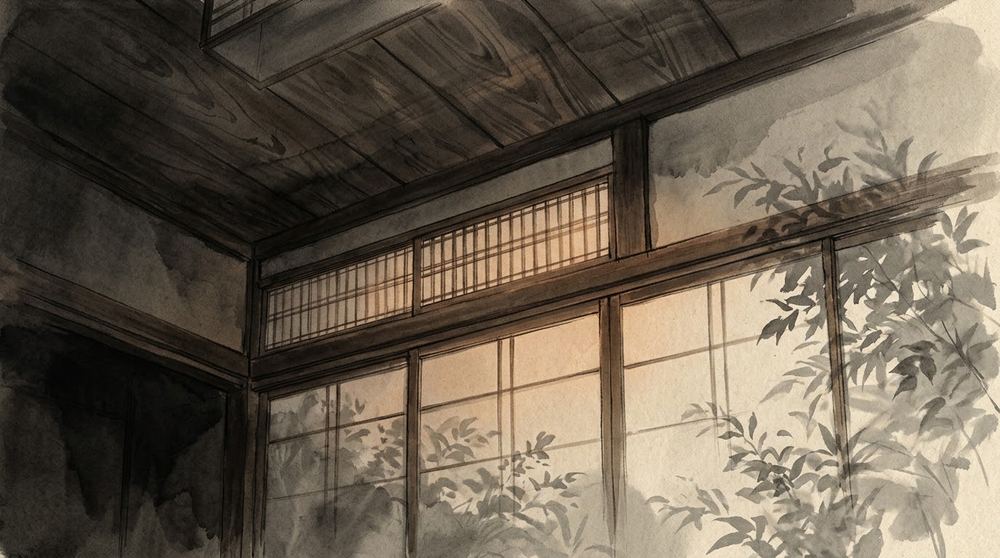
When the bedroom lamp goes out, the visual stage disappears. Neither parent nor child has to hold eye contact. Freed from having to watch how their words land on our face, a child’s nervous system finally lowers its shield. In the cool dark, with only the pale outline of the window frame and the familiar rhythm of a parent’s breathing nearby, thoughts that felt too clumsy or embarrassing in the daylight can float up to the surface without fear of being judged.
III. The Japanese Custom of Soine (日本の「添い寝」と、呼吸で伝える安心)
In Japan, this quiet threshold is woven into the longstanding custom of soine (添い寝)—literally, "lying down beside" a child until sleep arrives. In a traditional tatami room where cotton futons are laid out side by side on the woven rush floor, bedtime is not a sharp separation where a child is sent away into an isolated room while adult life continues brightly elsewhere. Instead, the household dims together.
Anthropologists and child psychologists who have studied Japanese family life often note that soine is less about physical sleep training and more about anshin (安心)—the bodily assurance that one is not alone at the edge of the unknown. To a young child, falling asleep is a small nightly surrender of control. When a parent lies beside them without checking a glowing screen or tapping a foot in impatience, the parent’s calm, slow breathing acts as a physical metronome. The child’s heart rate settles not because they were told to relax, but because the body next to them is genuinely at rest.
IV. The Bamboo Tray in the Hallway (廊下の竹籠にスマートフォンを置く)
Of course, it is almost impossible to offer that kind of stillness at nine o’clock if our pockets are still vibrating. A child can tell the difference between a parent who is truly in the room and a parent who is merely waiting for their breathing to slow so they can reach for a smartphone. Even when a screen is dimmed under the blanket, its blue glow and the sudden stillness of a scrolling adult hand send an unmistakable signal: my attention belongs somewhere more urgent than this room.
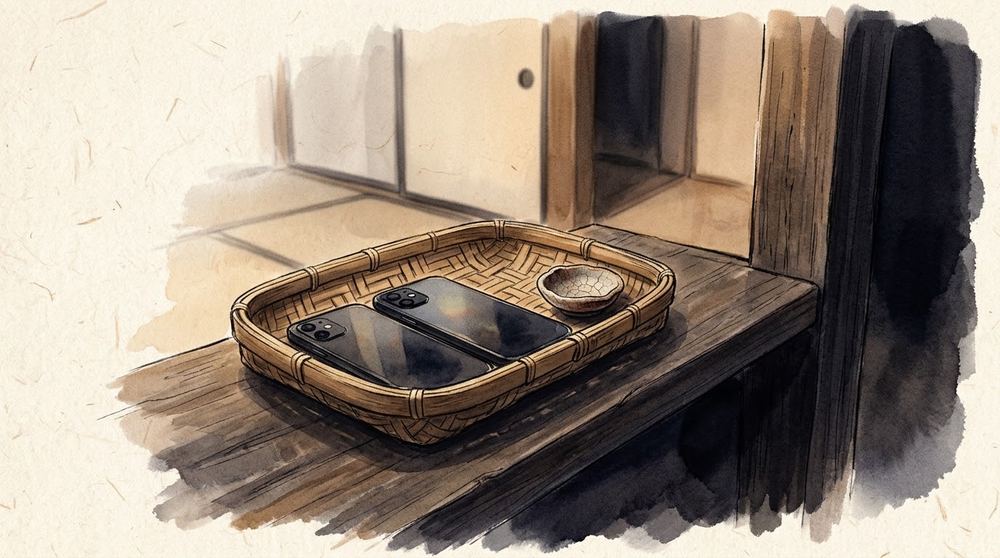
One of the simplest domestic habits that changes the texture of an evening requires no parenting philosophy at all—only a small woven bamboo tray placed on a shelf in the hallway outside the bedroom. Half an hour before bedtime, the adults place their phones face-down in the basket, alongside keys and wristwatches. Walking into the bedroom with empty hands changes our own posture as much as the child’s. Without a device waiting to reward our impatience, the ten minutes after the lamp goes out stop feeling like stolen time.
V. What Remains When the Years Shorten
On nights when the child is too tired to speak, those ten minutes in the dark are not wasted. You lie listening to the rain on the eaves or the faint rustle of garden leaves against the windowpane, watching the pale bars of moonlight shift across the ceiling boards. Within six or seven minutes, the child’s breathing deepens into the long, even cadence of sleep.
Childhood measures its seasons in ways we rarely notice until a phase has already closed. There comes an autumn when the bedroom door is shut for homework, when the questions are taken to friends instead of whispered into the pillow, and when nobody asks you to stay until they fall asleep. Giving ten unhurried minutes to the dark each night does not require heroic patience. It only asks us to remember that whatever is waiting on the kitchen counter or the phone screen will still be there at nine-fifteen—while the small voice in the dark will not wait forever.