In every childhood, there are fragile autumn evenings when a young boy or girl walks through the front entrance (玄関, Genkan) with lowered eyes and heavy footsteps—carrying a disappointing test mark crumpled in their schoolbag, a painful quarrel with a classmate, or the confession of a broken family teacup.
Grandparents in older Japanese households kept an unwritten rule during those exact moments: never lecture a child while their hands are still cold or trembling. First, offer a warm cotton towel, invite them to sit beside the sunken hearth (囲炉裏, Irori), and pour a cup of roasted barley tea.
I. The Rule of the First Ten Seconds (最初の10秒間が作る「心の安全基地」)
When a parent reacts in the first ten seconds with a sharp sigh, a raised voice, or an immediate interrogation—“How could you be so careless again?”—a child’s attention shifts at once from repair to self-defence. They stop thinking about how to repair the mistake and start calculating how to hide the next one.
By contrast, when the first ten seconds are met with a steady gaze and physical warmth—“I see you had a hard afternoon; come sit down and warm your hands first”—the child’s shoulders drop. Because they do not have to fight their parent, all of their emotional energy remains available to examine their own actions honestly.
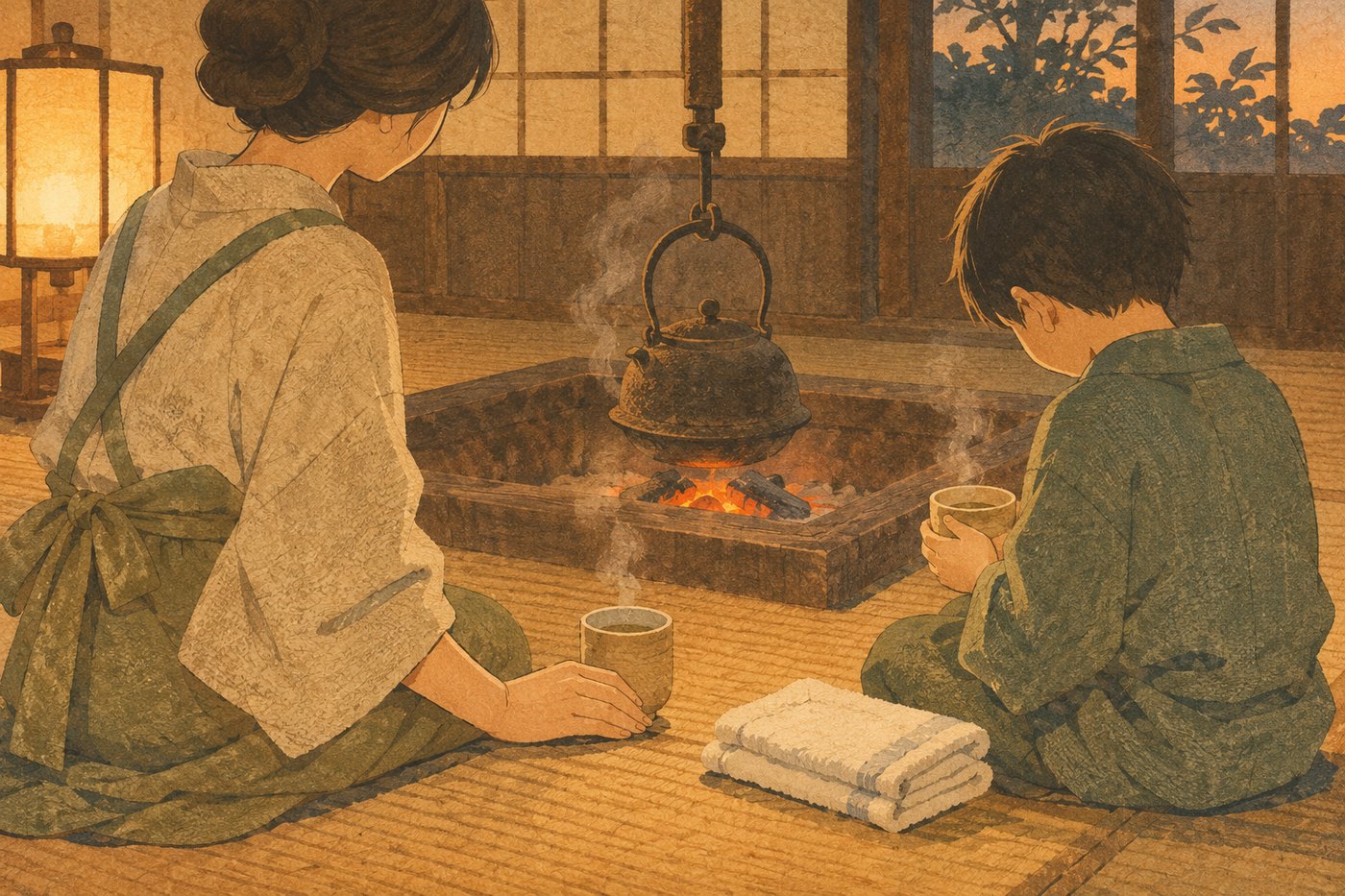
“A child who knows they will be heard with gentleness in their worst hour at age eight will still come home for your counsel when they face life’s storms at twenty-eight.”
II. Asking Questions That Open the Heart (心を開く「問いかけ」の知恵)
Once the room is quiet and both palms are wrapped around a warm mug, replace accusatory questions like “Why did you do that?”—which force a child to invent excuses—with a narrative invitation: “Tell me what happened from the very beginning; I am listening all the way to the end.”
More often than not, when a child is allowed to recount the whole story without interruption, they arrive at the moral lesson on their own before we even need to speak a word of correction. They will look into their teacup and say softly: “I think I spoke too impatiently to my friend.” At that moment, our only job is to nod and help them plan how to mend the bridge tomorrow.
III. Letting the Lesson Settle Like Evening Snow (新雪のように教えを心に染み込ませる)
Guidance offered in a calm, low voice beside the evening lamp settles deeply into a child’s memory like soft winter snow—nourishing the underground roots of honesty, accountability, and courage for decades to come.
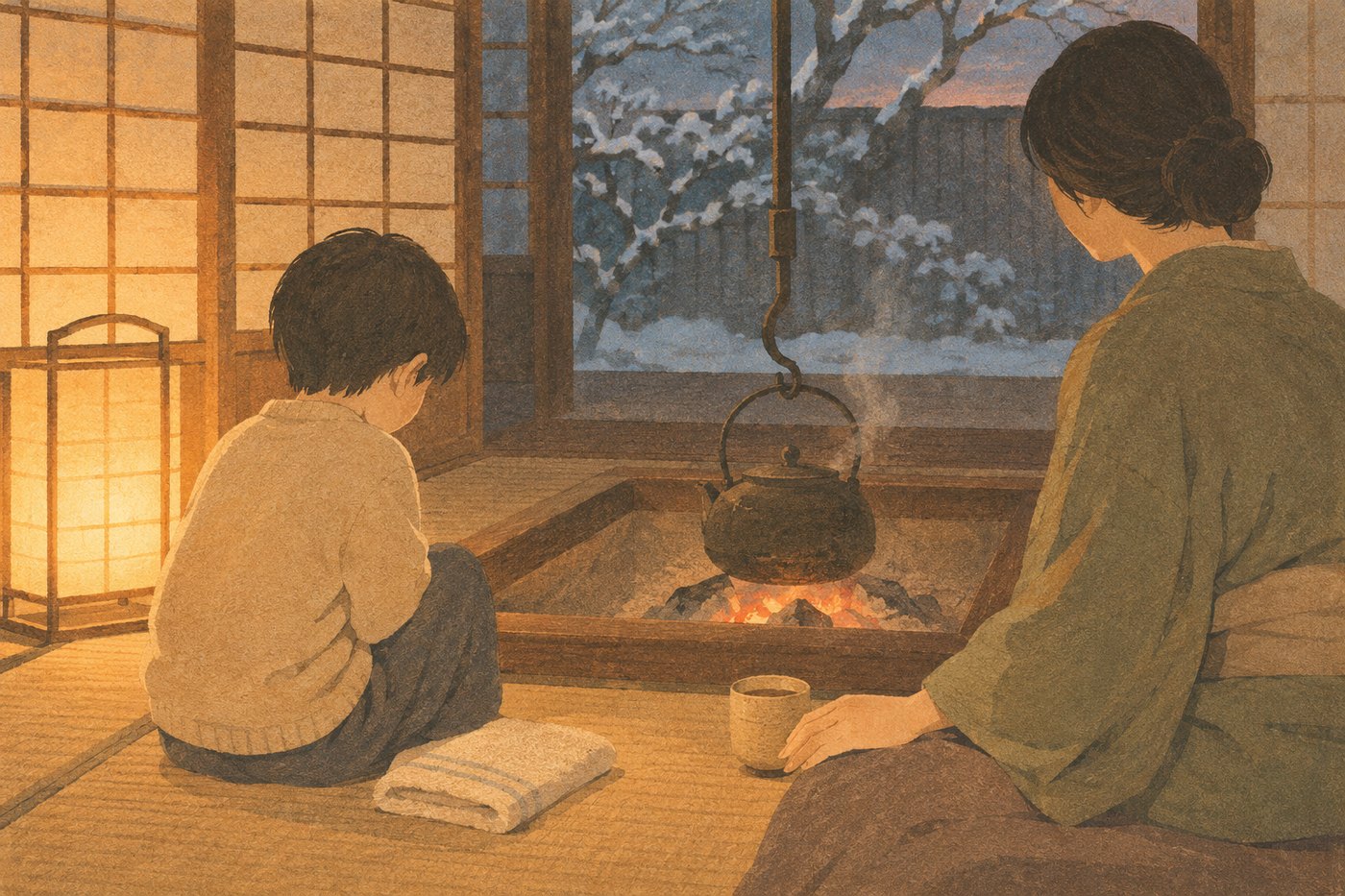
The same rule works in the other direction. On the same evening, over the same cups, a parent can be a little honest too: I spoke too sharply today. A house where both people are allowed to be corrected becomes a place where listening is a habit rather than a favour.
Daily Practice: The Warm Mug Promise (今夜から実践する「最初の一杯」の約束)
Make a quiet promise to yourself tonight: the next time your child spills something, confesses an error, or comes home upset, pause for three slow breaths before speaking. Offer warmth first, listen second, and advise last.