2. ENGLISH EDITION
I. The Wooden Box in the Back of the Drawer (箪笥の奥の桐箱と、真夜中のひとり芝居)
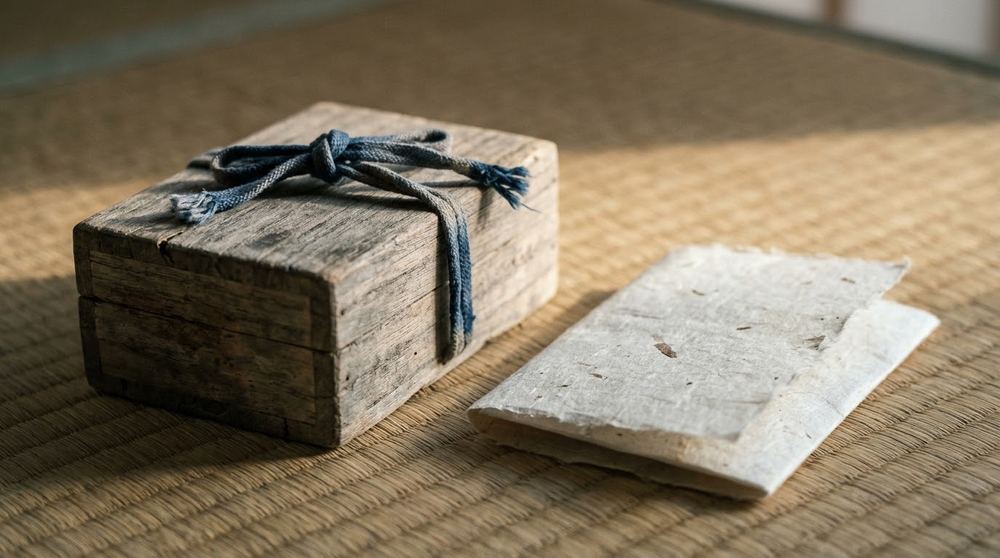
In many old Japanese houses, tucked behind winter kimono wraps in the lowest chest of drawers, there is a small paulownia wood box that no one opens. Inside, tied with faded cotton cord, sit letters that were either read too many times or never mailed at all—words written in the heat of a family quarrel, an unfair dismissal, or a friendship that ended without a clean goodbye. The paper has softened at the creases, yet whoever owns the box still knows every sentence by heart.
We do not need a paulownia box to keep such an archive. Most of us carry a private drawer in our own memory. We walk through an ordinary Tuesday morning, rinsing a teacup or waiting for a train, and suddenly we are back in a room from three years ago. We hear the exact inflection of a colleague’s remark, feel the tightening in our chest, and compose the devastatingly clear reply we wished we had spoken at the time. The other person has long since moved on—perhaps they barely remember the afternoon—yet in the theater of our mind, the furniture has never been cleared.
II. Bankei Yōtaku and the Guest Who Was Never Invited to Stay (盤珪永琢が説いた「不生」と、居座らせた客)
In the seventeenth century, the Rinzai master Bankei Yōtaku (1622–1693) broke with the custom of speaking only in arcane classical Chinese riddles. Traveling from temple to temple across Japan, from Ryōmon-ji in Harima to Edo, he spoke in plain, everyday Japanese to farmers, merchants, artisans, and samurai who came to him exhausted by their own minds. As recorded in the Bankei Zenji Goroku (The Recorded Sayings of Zen Master Bankei), one of the most frequent burdens people brought to him was chronic anger and the inability to forget an old humiliation.
A layman once confessed to Bankei that he had a fiery, unforgiving temper that seemed to flare up over old slights no matter how hard he tried to suppress it. Bankei did not lecture him on moral patience. Instead, he smiled and told the man that if this temper was an innate possession, he should bring it out and show it to him right then. The man replied that he could not produce it on command; it only appeared unexpectedly when provoked or when a memory surfaced.
Bankei pointed out the quiet truth hidden in that admission: if the grievance is not present right now unless you summon or manufacture it, then it does not belong to your original nature ( Fushō, the Unborn mind). You were not born carrying that argument. Every time an old resentment returns, you are not uncovering a permanent scar; you are freshly exchanging your clear, living awareness for a ghost, inviting a passing pedestrian into your house and insisting that he sit at the head of your table.
III. How We Keep the Charcoal Alive (火鉢の炭を生かし続ける手つき)
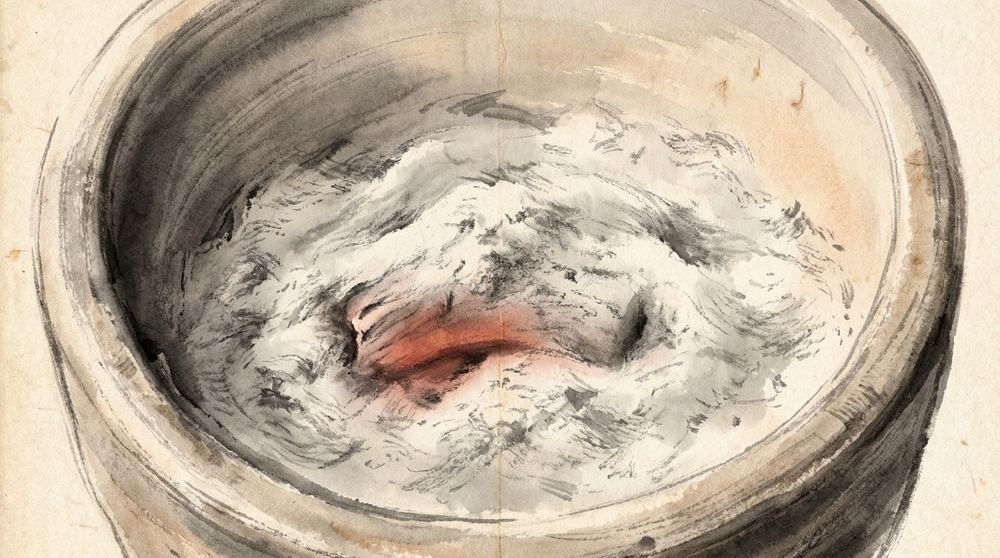
Why, then, do we work so hard to keep old hurts warm? In the winter rooms of traditional Japanese homes, heat came from a hibachi —a ceramic or wooden brazier filled with fine white ash ( hai ) and a few pieces of glowing sumi charcoal. Anyone who has tended a brazier knows a simple physical law: left exposed to the air and undisturbed, a single coal eventually burns itself out and cools into harmless gray powder. To keep an ember alive until morning, you must deliberately bury it deep under a blanket of ash and periodically stir it, feeding it just enough oxygen to smolder in the dark.
Our rehearsed grievances work by the same mechanics. Pain from an unfair event is natural; like a live coal, it burns when it first falls into our lap. Yet months or years later, the original fire would have gone out on its own had we not tucked it beneath layers of mental repetition. We rake the ash every time we retell the story to prove we were right, every time we check up on someone who wronged us, every time we use an old betrayal as armor against trusting anyone new. We think we are protecting ourselves from being burned again, while in truth we are the ones tending the brazier with our own hands at midnight.
IV. Yoshida Kenkō on Houses Crowded with Old Furniture (『徒然草』の調度と、朝日のなかの反故紙)
Three centuries before Bankei, the poet and recluse Yoshida Kenkō wrote in Section 72 of his Tsurezuregusa (Essays in Idleness, c. 1330–1332) that few things are more unpleasant to look upon than a house crammed with too much furniture, or a writing desk cluttered with too many brushes and scraps of paper. A room loses its dignity and usefulness when every corner is occupied by objects whose season has passed.
Kenkō’s observation about physical rooms applies with unsettling precision to the architecture of a human life. When we refuse to set down an old grievance, we leave heavy, broken furniture standing in the middle of our present days. A new conversation with a partner or a child has to squeeze sideways around a resentment from five winters ago. We become tired not because today’s work is too heavy, but because we are carrying the uncollected debt of people who have no intention—and often no ability—to pay us back.
V. Leaving the Letter Unsent
There is an old epistolary habit practiced by calligraphers and diarists when anger clouds the mind: take a sheet of thick hanshi paper, grind the ink slowly on the stone, and write out every grievance without restraint. Name the unfairness. Spare no detail. Then, instead of sealing the envelope, fold the sheet neatly, place it beside the brazier, and go to sleep.
By the following morning, something subtle has shifted. Because the words now sit outside the body on paper, the mind no longer feels the panicked obligation to repeat them in a loop lest they be forgotten. Reading the page in the cool light of dawn, we almost always notice how small the quarrel looks against the quietness of the morning room. Whether the paper is burned to white ash or left in a drawer and never opened again, the transaction is over. Setting down a grievance does not mean declaring that what happened was fair. It simply means deciding that your remaining mornings are too precious to spend as the unpaid caretaker of an old fire.