Behind the famous dry-landscape rock garden of Ryōan-ji (龍安寺) in northern Kyoto, tucked beneath a canopy of damp maple leaves and bamboo, sits a low stone water basin known as a tsukubai (蹲踞). Fed by a slender bamboo pipe that drips clear mountain water into its center, the stone is shaped like an ancient round bronze coin with a square hole at its heart.
Around the four sides of that central square, four incomplete characters are cut. Only when the viewer uses the square hole as the shared element — 口, the character for mouth — do they complete themselves: Ware tada taru wo shiru (吾唯足知), "I know only that I have enough." The basin is said to have been given to the temple by Tokugawa Mitsukuni in the seventeenth century; the temple keeps the gift as tradition, and no document records it.
I. The Stone Basin That Requires a Slight Bow (頭を垂れて水を掬う蹲踞の教え)
There is a quiet architectural genius in how tea masters positioned the tsukubai. Because the stone basin is set close to the mossy earth, no visitor—whether merchant, scholar, or feudal lord—can scoop water to purify their hands while standing stiffly upright. One must bend the knees and bow slightly toward the water.
“He who knows that enough is enough will always have enough; he who chases after endless surplus remains poor even in a palace.”The line is usually traced to Laozi: 知足者富 — knowing contentment is wealth.
Notice the irony built into the stone’s shape: the artisan used the form of a monetary coin to teach the exact opposite of greed. Contentment (足るを知る, Taru wo shiru) is not passive resignation or settling for mediocrity. Rather, it is the crystal-clear recognition of the wealth already resting in our hands before envy convinces us we are lacking.
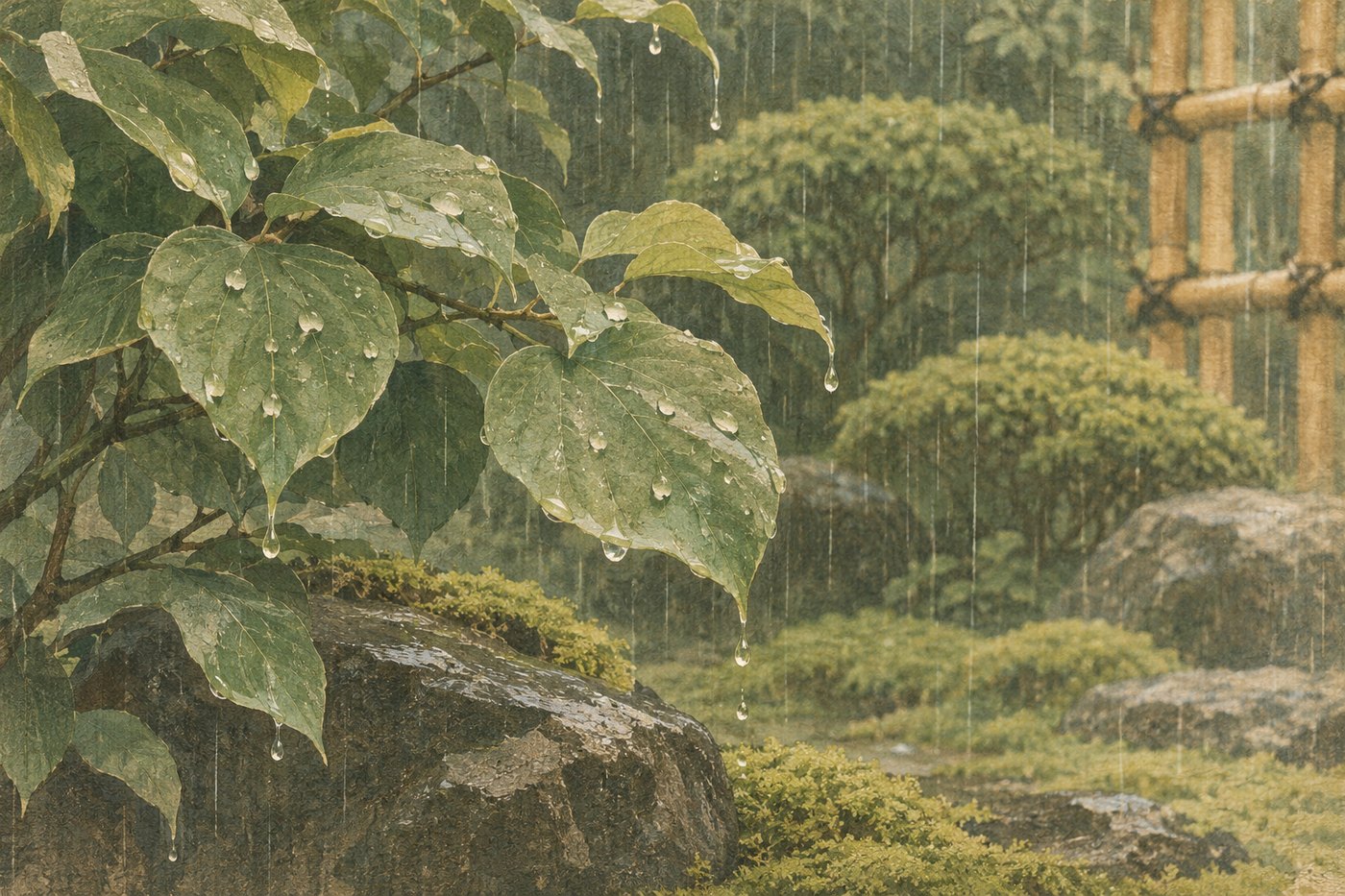
II. Why Comparison Steals the Sound of the Rain (比較という病が奪う日常の恵み)
In an economy engineered around perpetual dissatisfaction, we are subtly trained to measure our worth by what is missing from our house rather than what is warm inside it. We sit under a dry roof during an autumn downpour, yet our minds wander anxiously toward someone else’s larger estate, louder applause, or faster promotion.
The poet Ryōkan (良寛, 1758–1831), who lived in a small thatched hut called Gogō-an on Mount Kugami, is said to have had his only blanket stolen one night. Looking up through his open window at the bright harvest moon, Ryōkan wrote gently: "The thief left it behind—the moon at my window." The story is told as a legend rather than a record. Its point still holds: what made him sufficient could not be carried off, because it rested on attention rather than possessions.
III. Distinguishing Needs From Borrowed Desires (「自分の幸せ」と「他人の物差し」を分ける)
Most of the restlessness that keeps us awake at night does not come from our actual needs; it comes from borrowing our neighbor’s yardstick to measure our own garden. When we bow slightly like a visitor at the Ryōan-ji water basin and taste the cool clarity of what we already possess, the fever of comparison breaks on its own.
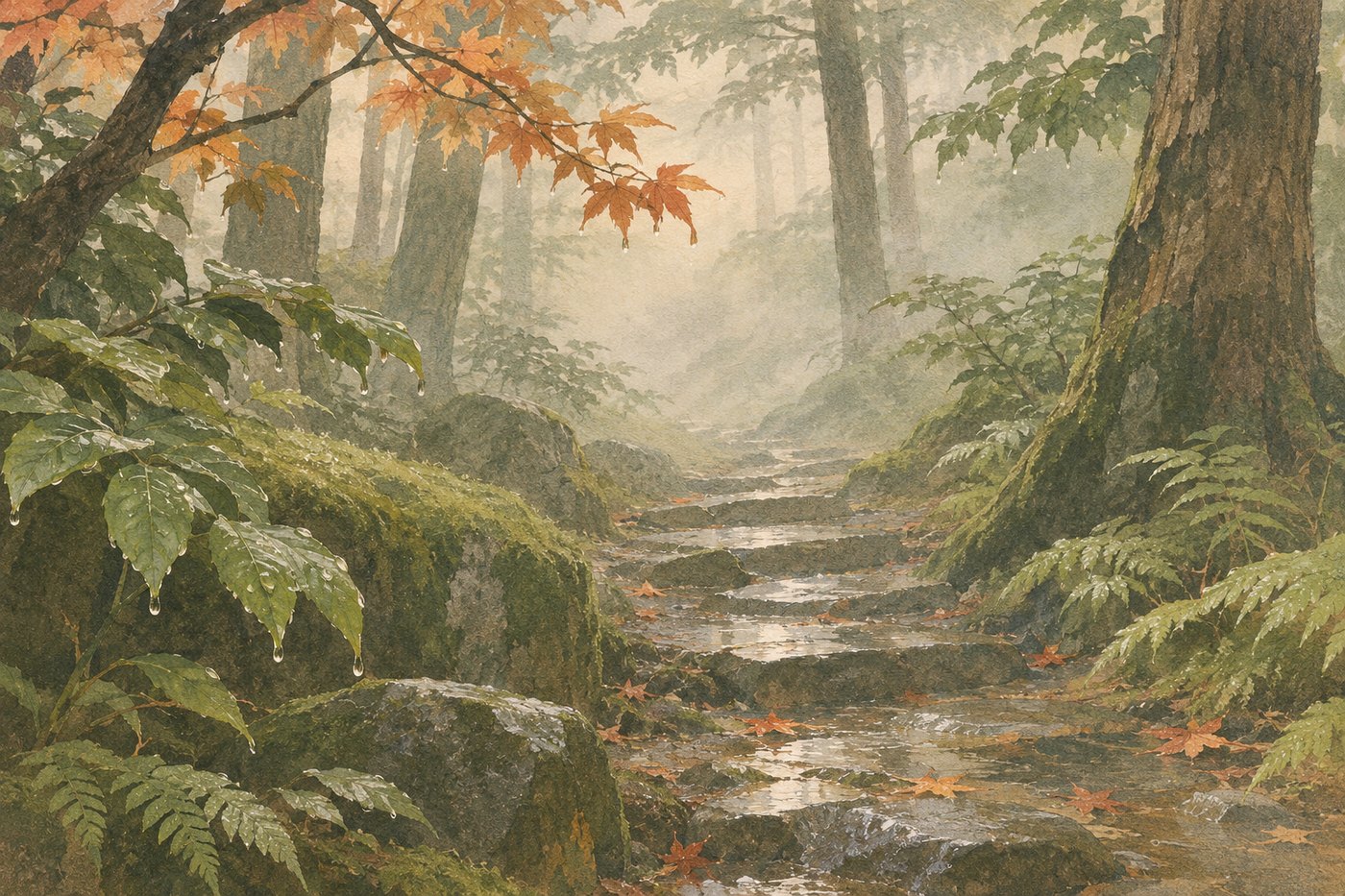
An Evening Inventory of Sufficiency (雨の夜に「すでにあるもの」を数える)
Tonight, when the day’s work is finished, sit for five minutes near a window or veranda with a cup of warm tea. Name three ordinary shelters already present in your life—clean water from the tap, a dry roof over your bed, a person whose voice brings you peace—and let the quiet wealth of "enough" settle into your chest.