When a cherished ceramic tea bowl slips from our fingers and shatters against the stone floor, our immediate modern impulse is either to sweep the shards into the bin in embarrassment or to hunt for a transparent chemical adhesive that will pretend the accident never happened. We are taught from childhood that value belongs only to the unblemished and the brand-new.
The best-known account of its beginning is told rather than documented: in fifteenth-century Kyoto, the shogun Ashikaga Yoshimasa sent a fractured celadon tea bowl back to China for repair, and it returned fastened with clumsy metal staples. Japanese lacquer artisans, the story goes, set out to heal such a bowl more honorably. Whether or not that exchange happened as told, the technique it describes is real. They called this discipline Kintsugi (金継ぎ)—"golden joinery"—or Kintsukuroi (金繕い), "golden mending."
I. The Slow Alchemy of Urushi Sap and Powdered Gold (漆と金粉が紡ぐ再生の時間)
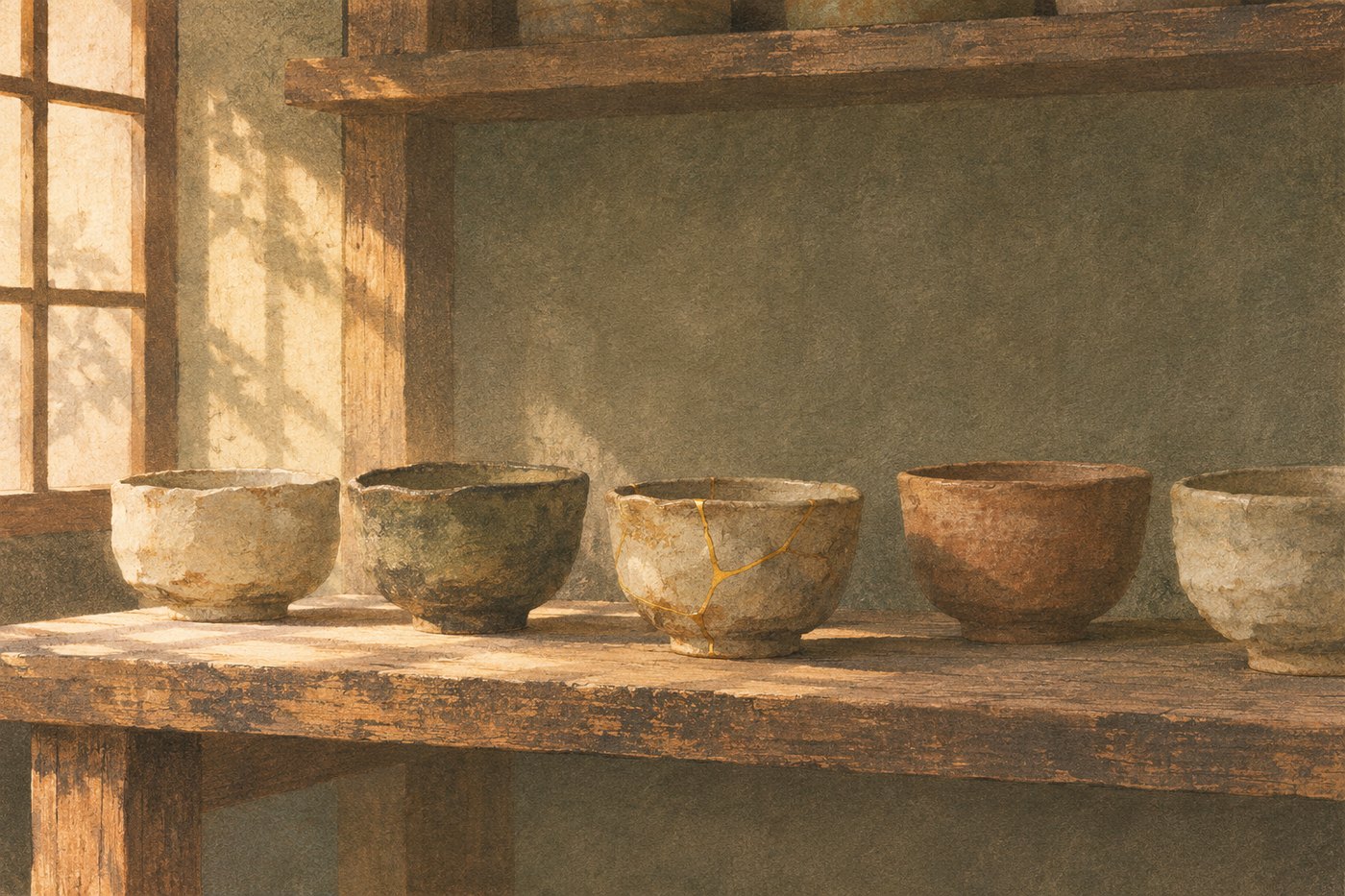
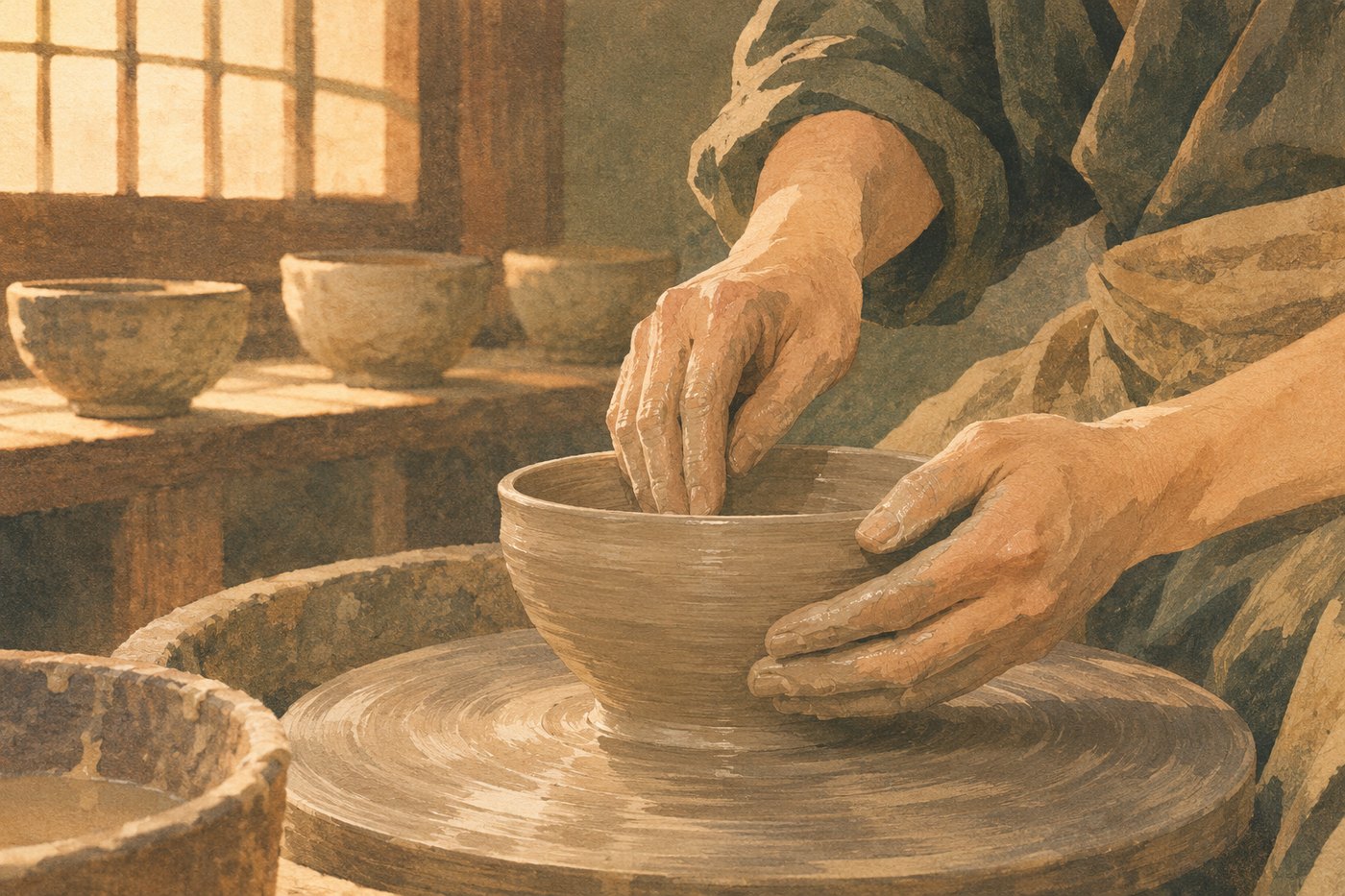
Authentic Kintsugi cannot be rushed in an afternoon. Using natural Urushi (漆) lacquer harvested from the sap of lacquer trees, the craftsman carefully binds the ceramic fragments back together, fills missing chips with a paste of clay and lacquer, and waits weeks in a warm, humid wooden cabinet (室, Muro) for the joins to cure. Only at the very end does the artisan trace the raised fracture lines with a fine brush and dust them with pure powdered gold or silver.
“The bowl is more precious after it has been broken and mended with patience, because its golden veins tell the honest story of what it has survived.”
In the sensibility later named Wabi-Sabi (侘寂), the golden seams are not concealed but read as the piece's keshiki (景色) — its scenery, the part of the surface the eye goes to first. No two bowls ever shatter in the same pattern, which means the repaired teacup is now uniquely, irreplaceably itself.
II. Mending Human Grief Without Hiding the Seam (人生の喪失を隠さずに生きる)
How differently we treat our own hearts when we encounter grief, a failed endeavor, or a season of burnout! We often exhaust ourselves trying to present a smooth, porcelain facade to neighbors and colleagues, ashamed that life has left a visible crack across our confidence.
Yet think of the people you trust most deeply in moments of sorrow. Rarely do we seek counsel from someone who claims to have glided through life untouched by difficulty; we gravitate toward the friend or elder whose own healed fractures glow with quiet humility, patience, and non-judgment.
III. Why the Muro Cabinet Requires Darkness and Time (「室(むろ)」の暗闇の中で傷が癒える理由)
One of the most fascinating secrets of Urushi lacquer is that it does not dry by evaporation in harsh sunlight; it cures through slow polymerization inside a dark, warm, humid wooden chamber called a Muro. Human grief heals by the exact same law. When we stop forcing ourselves to "get over" a loss under bright public scrutiny and allow our heart quiet time in a gentle, sheltered space, the bond knits together stronger than before.
Honoring Your Own Landscape of Survival (自分の「景色」を肯定する対話)
Write down one painful setback or loss from your past that you have long judged as a personal flaw. Beneath it, write two quiet strengths or forms of empathy that entered your character solely because you walked through that mending process. That hard-won compassion is the powdered gold resting in your seam, turning yesterday’s fracture into a warm lantern that comforts others.