Stepping through the low wooden crawling-in entrance (にじり口, Nijiriguchi) of a traditional Japanese tearoom, guests often encounter a hanging calligraphy scroll in the alcove bearing four brushstrokes: Ichigo Ichie (一期一会)—literally, "One time, one meeting." The idea belongs to the sixteenth-century tea master Sen no Rikyū, who taught that a gathering should be met as one that could occur only once in a lifetime. His disciple Yamanoue Sōji recorded it in 1588, and the four-character phrase itself was coined some two and a half centuries later, around 1858, by Ii Naosuke in his treatise Chanoyu Ichie Shū. Either way, it carries a deceptively simple warning against human complacency.
We habitually divide our days into "special occasions" that deserve our full attention and "ordinary routines" that we sleepwalk through. We assume that because we live under the same roof as our spouse, our aging parents, or our children, we will have ten thousand more dinners to truly listen to what they are saying.
I. The Illusion of Identical Tomorrows (「また明日がある」という幻想を手放す)
Yet the tea masters observed nature too closely to believe in repetition. Even if the exact same four friends gather in the exact same tearoom at the same hour next week, the charcoal in the hearth will burn with a different crackle, the late autumn maple leaves outside the paper shōji window will have fallen further, and the silent burdens carried inside each guest’s chest will have shifted.
“Treat every shared bowl of tea and every quiet conversation across the table as if it were the only time in human history you will ever cross paths.”
In Chanoyu Ichie Shū, Ii Naosuke wrote that both host and guest must prepare for a gathering with the quiet sincerity of someone who knows they may never meet again in this lifetime. From wiping the bamboo tea scoop to listening to the kettle’s pine-wind sound (松風, Matsukaze), no gesture is treated as a rehearsal for a better day later on.
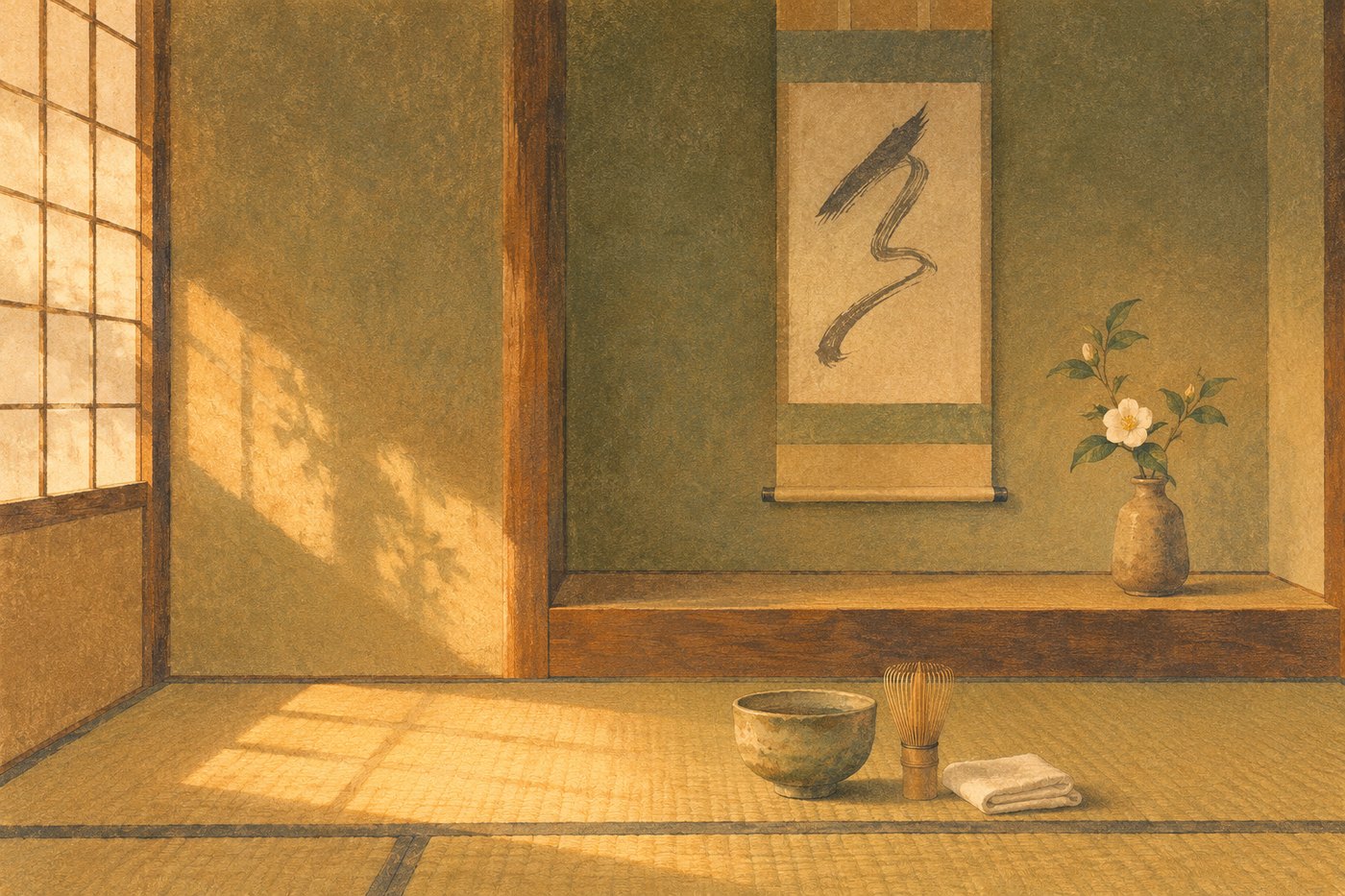
II. Transforming the Ordinary Family Dinner Table (日常の食卓を一期一会の場に変える)
What happens when we bring the spirit of Ichigo Ichie out of the tearoom and into our Tuesday evening kitchen? Suddenly, the half-distracted habit of scrolling through messages while someone we love speaks across the table reveals itself for what it truly is: trading an irreplaceable living moment for a ghost of elsewhere.
Consider how differently we listen when we remember that a seven-year-old child’s way of pronouncing a long word will vanish by next winter, or that an elderly parent’s childhood memory is a fragile lantern flickering in the evening breeze. Presence is not a grand philosophical achievement; it is the decision to look directly into the eyes of the person sitting across from us right now.
III. The Farewell Hidden Inside Every Greeting (出会いと別れをひとつに結ぶ心)
In Chanoyu Ichie Shū, Ii Naosuke sets down the ending of a gathering: once the guests have passed out through the garden gate, the host should not begin clearing the room, but sit quietly and watch until the last figure is out of sight, and only then go back alone into the tea room. The practice has a name of its own, dokuza kannen (独座観念) — sitting alone with the gathering after it has ended. Why? Because acknowledging the fragility of a life does not make us morose; it makes us tender, attentive, and slow to spend our anger on small slights.
The Single-Breath Threshold Practice (帰宅時の「一呼吸」の実践)
Before turning the doorknob to enter your home this evening—or before sitting down to a shared meal—pause for one complete breath. Silently repeat the words "Once in a lifetime," set your devices face-down out of reach, and greet the people in the room as if you had traveled a thousand miles just to sit beside them tonight.