A story that Zen teachers in the West have told for a century begins like this: a Japanese master of the Meiji era (1868–1912) named Nan-in received a university professor who came to ask about Zen. The story was first printed in 1919, in a collection compiled by the Zen teacher Nyogen Senzaki, and it became famous in 1957 through the anthology Zen Flesh, Zen Bones. No independent record of the meeting survives. That is worth saying before we begin, because the story is not a report of an event; it is a teaching, and the teaching is about a cup.
From the moment he bowed and sat upon the aged tatami mat, the professor spoke without pause. He recounted the texts he had translated, the philosophical debates he had won in Tokyo, and the criticisms that still kept him awake at night. The old master did not interrupt once; he merely tended the glowing charcoal brazier and lifted the cast-iron tetsubin kettle with steady hands.
I. The Parable of the Overflowing Porcelain (溢れ出る茶碗の教え)
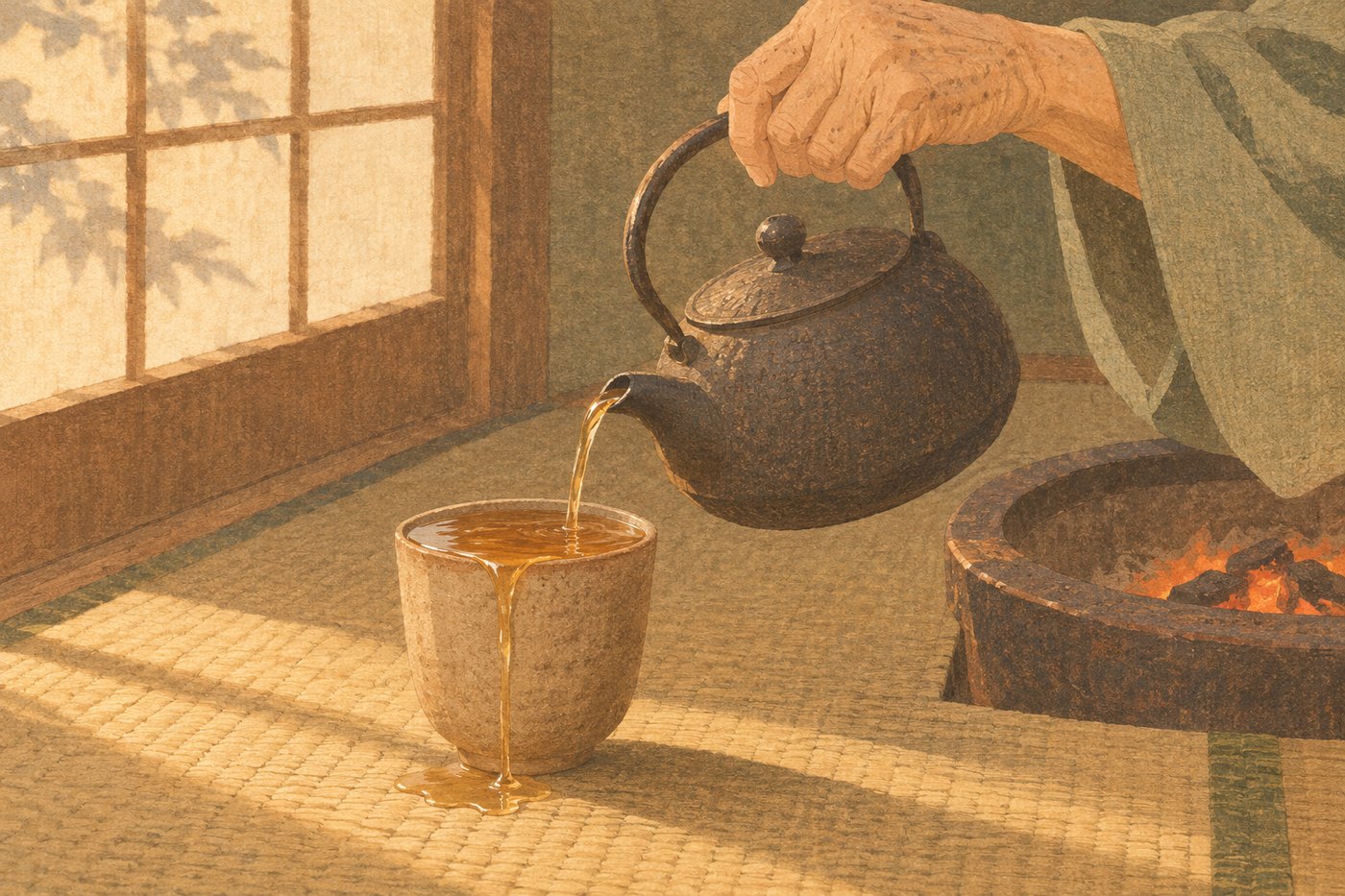
Nan-in placed a plain clay teacup before his guest and began to pour warm tea. Soon the tea reached the brim, and the old monk kept pouring. It ran over the rim and soaked into the mat between them.
“Like this teacup, your mind is already brimming with your own opinions, defenses, and anxieties. How can I show you the taste of quietness unless you first empty your cup?”
Startled out of his monologue, the professor cried out: "Master, stop! Can you not see the cup is completely full? Not another drop will go in!" Nan-in gently set the iron kettle back onto the hearth trivet and looked at the scholar with eyes full of unhurried warmth. In that sudden, unguarded silence, the professor heard the mountain wind moving through the cedar branches outside for the first time all afternoon.
II. Why Modern Minds Suffer From Perpetual Overflow (現代人の心が溢れ続ける理由)
More than a century later, our condition is remarkably similar to that weary scholar’s—except we no longer need to climb a mountain carrying heavy trunks of books. Every morning before our feet even touch the wooden floorboards, we reach for a glowing glass screen and pour a hundred competing voices straight into our porcelain cup. We consume breaking headlines, professional comparisons, and urgent messages before we have even taken three conscious breaths.
When a vessel is filled to the lip with yesterday’s grievances and tomorrow’s hypothetical fears, even the gentlest joy—a child’s question at breakfast, the scent of rain on dry pavement, or a friend’s quiet confession—has nowhere to land. It simply spills over the edges unnoticed. Emptying the cup does not mean abandoning responsibility or forgetting what we have studied; it means releasing the need to prove, defend, and anticipate everything at once.
III. The Architecture of an Unhurried Morning (「心の余白」を守る朝の作法)
Many monastic schedules set the first half hour of the day apart: before letters, before argument, only sweeping the corridor and boiling water. When we protect even ten minutes of unhurried emptiness at dawn, our mind regains its natural depth—capable of holding whatever the afternoon brings without spilling over in irritation.
The Ten-Minute Morning Vessel Ritual (朝の10分間「心を空にする」実践)
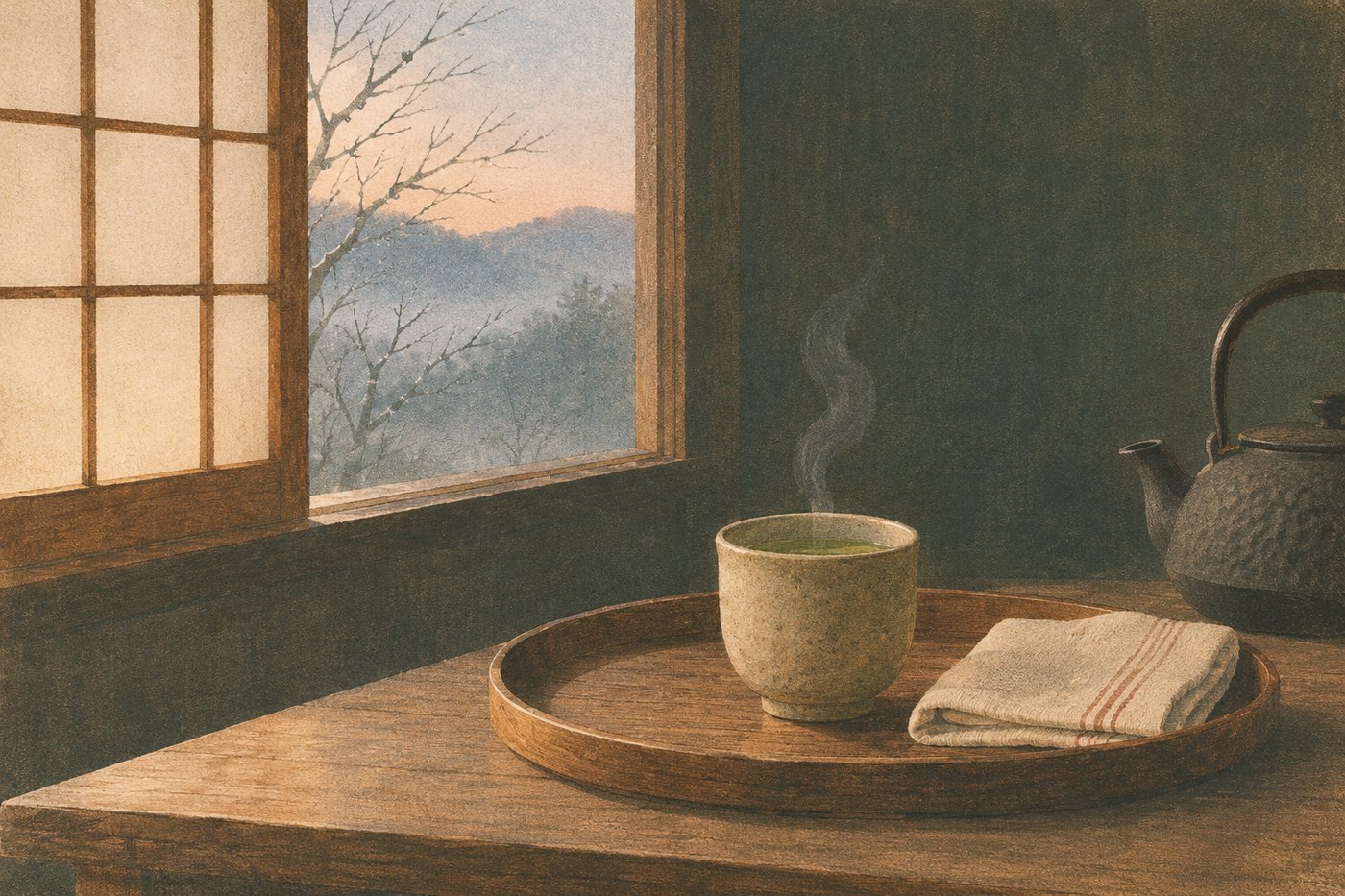
Tomorrow morning, keep your phone in another room for the first fifteen minutes after waking. Boil water slowly, warm a ceramic cup between both palms, and sit near a window without any agenda to improve yourself. When impatient plans arise, simply notice them as steam rising from the rim and let them dissolve into the quiet air before your day begins.
Author’s note: “A Cup of Tea” was first published in 101 Zen Stories (1919), compiled by Nyogen Senzaki, and reached a wide audience through Zen Flesh, Zen Bones (1957). It is a teaching story, not a documented historical event; the dialogue and the professor’s biography are part of the telling.