A Quiet Zen Story for Anxiety: Ryokan’s Moon and the Art of Resting the Mind
When you need a quiet Zen story for anxiety late at night, the 19th-century monk Ryokan offers a gentle place to rest. After a thief stole the only blanket from his mountain hut, Ryokan simply looked out at the bright autumn moon and realized that the most essential peace in life cannot be taken away. For an anxious mind caught in loops of worry before bed, this brief tale invites quiet reflection rather than forced positivity.
I. The Story: The Thief and the Moon at the Window (盗人が残していった、窓の月)
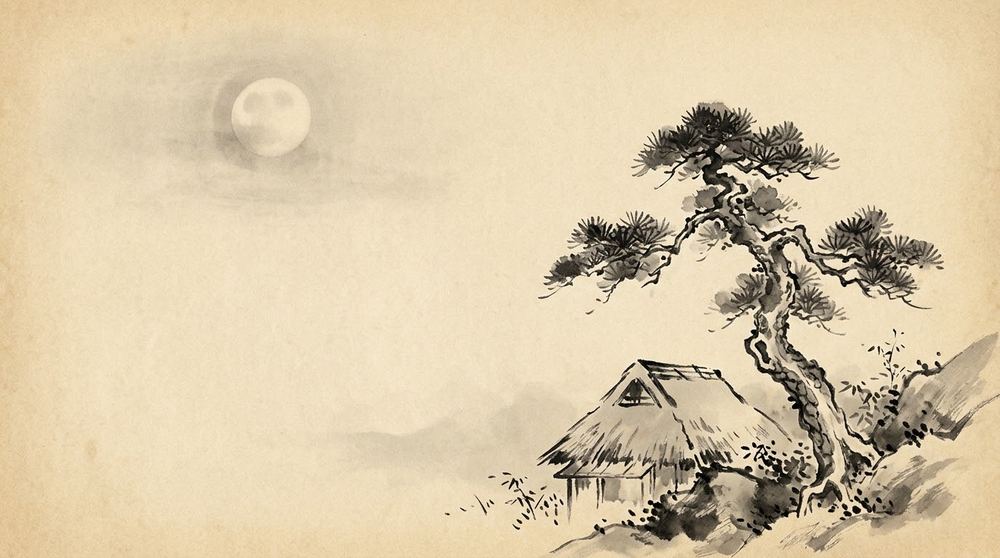
High on the wooded slopes of Mount Kugami in Niigata, the Zen monk Ryokan lived in a tiny thatched hut called Gogo-an. The name meant "Half-Pint Hermitage," named after the small daily portion of rice that sustained him.
He owned almost nothing. A wooden bowl, a threadbare robe, a few scrolls of poetry, and a single rough cotton quilt for the cold mountain nights.
One autumn evening, Ryokan returned from walking in the village below to find a stranger rummaging through the dim interior of his hut. The man froze. He had come to steal, yet his hands were empty because there was nothing of value to take.
Silence filled the small room.
Ryokan looked at the intruder's tense shoulders and hungry eyes. Quietly, the old monk untied his outer robe and lifted the thin cotton quilt from the straw floor. He held them out to the thief.
"You have come a long way up the mountain to visit me," Ryokan said softly. "You should not return empty-handed. Please, take these."
Bewildered and ashamed, the thief clutched the bundle to his chest and fled into the dark cedar trees without a word.
The mountain wind grew sharp.
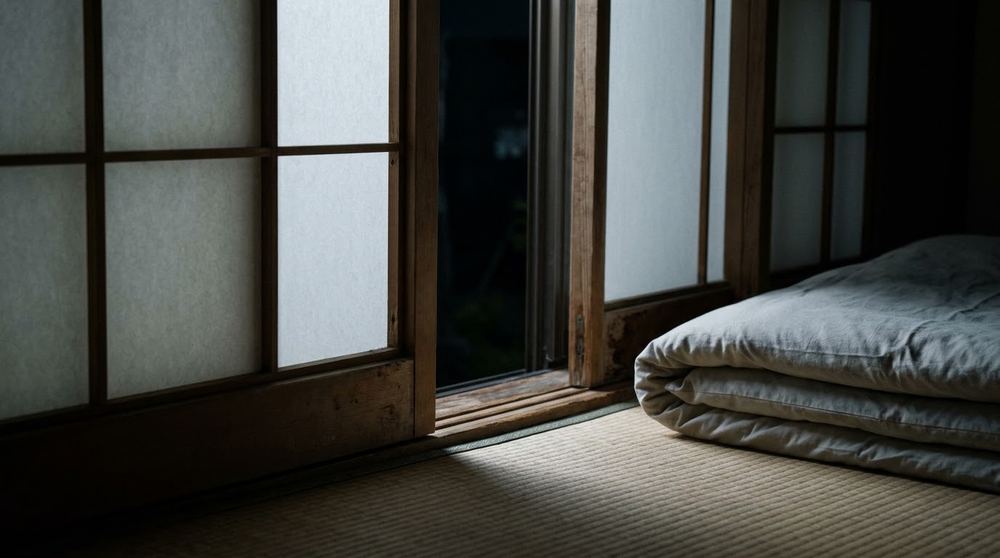
Ryokan sat down on the bare woven mat in his undergarment. Through the open bamboo lattice, the full autumn moon had risen above the ridge, pouring pale silver light across the empty floor. He felt the cool air on his skin, listened to the distant crickets in the grass, and thought of the frightened man hurrying down the dark path.
"Poor fellow," Ryokan murmured to the empty room. "I wish I could have given him this wonderful moon."
The thief left it behind: The moon At my window. (Nusubito ni / torinokosareshi / mado no tsuki)
Look at the symbolism of that moon at the window. Everything that could be carried off was gone, yet the room was full of light. In radical simplicity , the monk found himself richer than the man who ran away with his coat
II. Meaning & Nuance: Peace Is Not Denial (綺麗事ではない、夜の静けさ)
When we hear stories of old masters smiling at misfortune, it is easy to dismiss them as fairy tales. When bills are due, medical results are uncertain, or a child is struggling, nobody wants to be told to simply look at the moon and smile.
Anxiety is real. Loss stings.
Ryokan's calm was not naive denial of a harsh reality. He still felt the cold autumn draft on his bare shoulders that night. In his other poems, Ryokan wrote candidly about shivering through winter snows, missing old friends who had died, and listening to the lonely patter of cold rain on his roof. He did not pretend that cold was warm, or that loss was gain.
Instead, his peace came from where he rested his attention.
When anxiety wakes us at two in the morning, our thoughts act like the thief in the hut. They ransack tomorrow. They tally up what might go wrong, what we have lost, or what we lack. Worry convinces us that because one part of life is threatened, the whole house is empty.
Ryokan noticed what was gone, and then he noticed what remained.
The quilt was gone. The moon was still there.
His response suggests a subtle shift: we do not have to solve every vulnerability tonight in order to recognize that some quiet, untouchable beauty still exists right beside us.
III. Japanese Thought: Wabi-Sabi, Mono no Aware, and the Space to Breathe (「わびさび」と「間(ま)」がくれる心の余白)
Three quiet threads of Japanese aesthetics run beneath Ryokan’s night by the window.
First is Wabi-sabi —often described as beauty in imperfection, though in a monk’s hut it is lived as seihin , an unburdened simplicity that feels complete rather than lacking. By owning little, Ryokan had very little to defend. Much of modern exhaustion comes from guarding too many expectations: how a career must look, how others must perceive us, how every hour must be productive. When the room is bare, the moonlight has somewhere to land.
Second is Mono no aware , a tender sensitivity to the passing nature of things. Ryokan did not hate the thief, nor did he cling to the quilt. Both the blanket and the autumn moon were temporary companions. Meeting uncertainty with tenderness rather than clenched fists softens the sharp edges of fear.
Third is Ma (間)—the intentional pause or empty space between things. In traditional ink painting, the unpainted paper is not wasted space; it is what allows the mountain and the moon to breathe.
Our minds need Ma too.
Anxious thinking crowds every corner of the mind with noise, leaving zero margin between a trigger and a catastrophe. Sitting before the open window, Ryokan stepped into the wide, quiet interval between an event and the need to panic about it.
IV. In Daily Life: Resting the Mind When Sleep Won't Come (眠れない夜、窓辺の月を見つける小さな習慣)
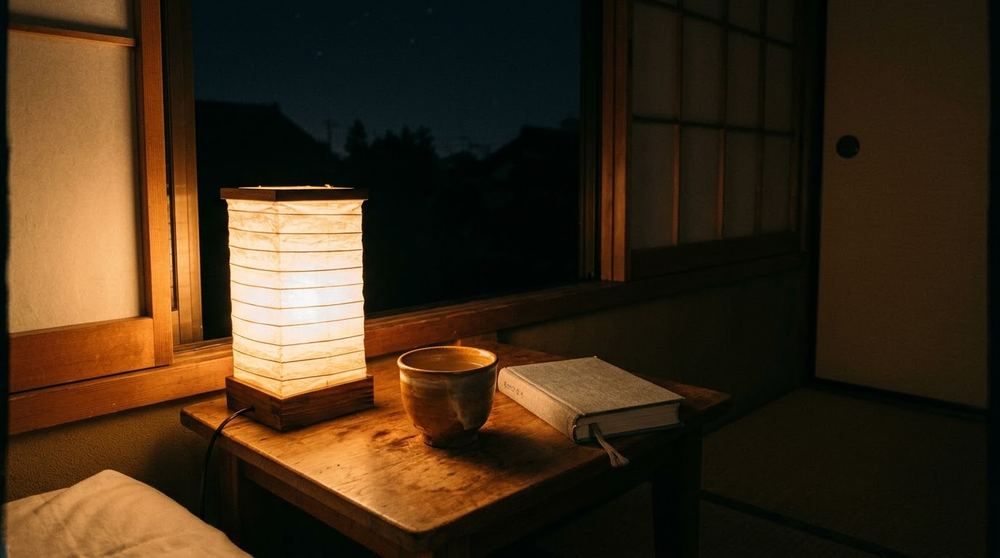
Picture a familiar midnight scene. The house is dark, the clock on the nightstand glows 2:14 a.m., and your chest feels tight over an email you need to send tomorrow or a conversation you cannot undo. Or perhaps you are sitting beside the bed of a restless child who cannot fall asleep because they are worried about school the next day.
In that moment, arguing with anxious thoughts rarely works. Telling yourself—or a child—"stop worrying, everything is fine" only makes the mind push back harder.
Instead of fighting the thief, look for the moon at the window.
Building emotional resilience at night starts with the body, not with logic. When worry spikes, try this quiet three-minute practice for nervous system calm :
- 1. Name what is gone or uncertain without fighting it. Whisper inwardly: Right now, I am worried about tomorrow. That is here. This simple act of acceptance stops the exhausting second battle—the anxiety about being anxious.
- 2. Widen the frame of the room. Turn your eyes toward one ordinary, steady detail in the dark. The pale line of light along the curtain edge. The slow rise and fall of a sleeping child’s back. The cool touch of the cotton sheet against your ankles.
- 3. Offer yourself warmth. Just as Ryokan wished the thief well instead of cursing him, practice quiet self-compassion toward your own tired brain. Your mind is only trying to protect you, even if it is doing so clumsily in the dark.
Let the breath slow down.
You do not need to figure out next month tonight. To sleep better , you only need to notice one small, steady thing in this room that the worry has not taken away.
V. A Quiet Takeaway (今夜の静かなひとこと)
“Anxiety counts everything that might be taken away; stillness notices the moon that remains at the window.”
A question for tonight: When your thoughts feel crowded with what is missing or uncertain, what is one quiet, untouchable thing still resting right beside you?