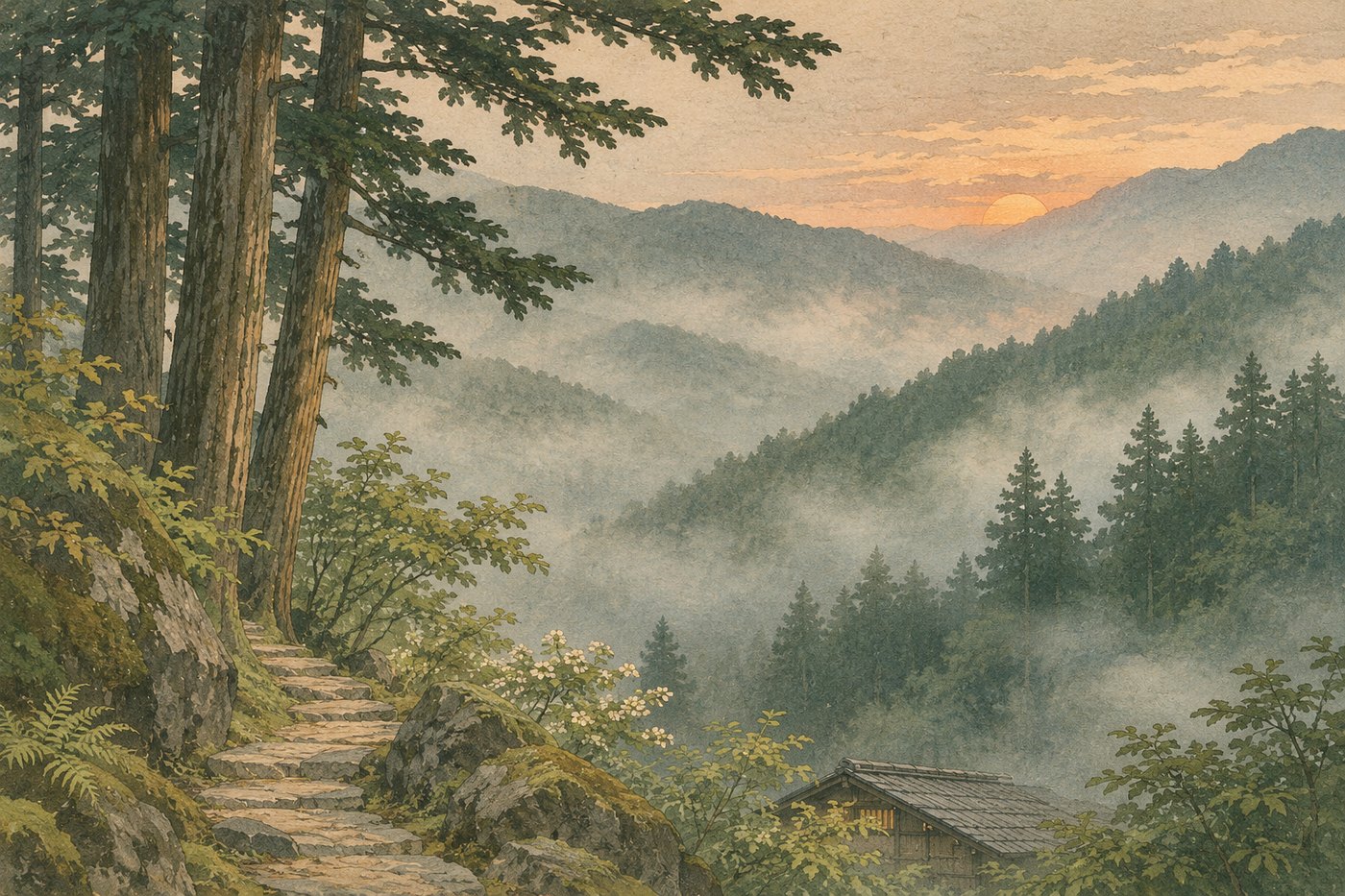
In the deep mountain valleys of Kiso in Nagano Prefecture, where hinoki cypress (檜) and sawara cypress trees grow slowly through centuries of biting winter snow, there lived an old temple joiner and woodworker named Master Genzō. Even in his eightieth autumn, villagers from three valleys away carried their broken heirloom tansu chests and weathered shrine doors up the stone path to his workshop.
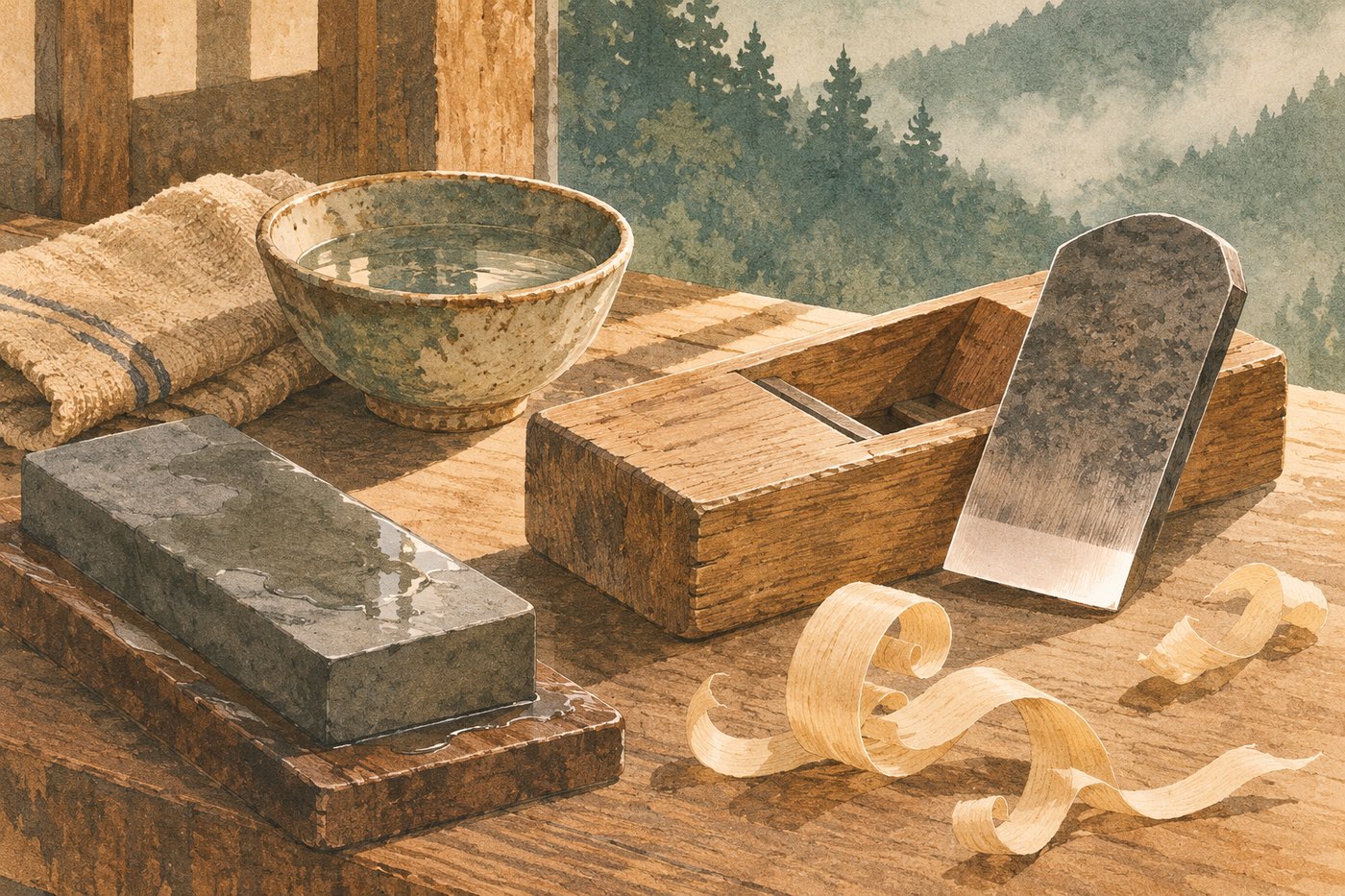
One crisp October morning, his sixteen-year-old grandson arrived at the shed eager to finish building a cedar writing table before noon. While the boy immediately reached for the crosscut saw and began marking measurements in haste, the old man sat quietly on a low wooden stool by the open doorway with a fine water stone (砥石, Toishi) and a ceramic bowl of cold well water.
I. The Whetstone and the Unhurried Blade (砥石と静かな刃の教え)
For twenty-five minutes, the only sound in the mountain workshop was the steady, rhythmic whisper of laminated steel gliding back and forth across wet stone: Shū... shū... shū. Growing restless as the morning sun climbed above the cedar ridge, the grandson finally set down his ruler and asked why they were wasting half the morning sharpening a plane blade (鉋, Kanna) that already looked bright to the eye.
Master Genzō wiped the steel blade on a clean hemp cloth, held its edge toward the morning light, and invited the boy to sit beside him. "When you look at this whetstone (砥石)," the grandfather said softly, "you think I am only sharpening iron. In truth, the stone is sharpening my patience and quieting my hands before I meet a tree that took two hundred years to grow."
“A dull mind in a hurry tears the grain of the wood; a quiet mind with a prepared blade lets the cypress reveal its own mirror.”
II. Why Shortcuts Always Cost Twice the Time (近道が一番遠回りになる理由)
When Master Genzō finally fitted the blade into its oak block and drew the hand plane toward himself along the four-foot cedar board, a single translucent ribbon of wood—thinner than silk paper and fragrant with forest resin—curled effortlessly into the air. Beneath the plane, the timber gleamed like still mountain water, needing neither sandpaper nor chemical varnish to repel moisture for the next hundred years.
By contrast, the plank the grandson had sawed and planed in a rush was covered in tiny torn fibers where his unsharpened blade had fought against the wood grain. It took the boy all afternoon to sand out the scars that twenty minutes at the whetstone would have prevented.
III. Honoring the Grain in Our Daily Work (日々の仕事と人生の木目を敬う)
Whether we are writing a difficult letter, mending a family misunderstanding, or building a lifelong vocation, our elders remind us that preparation is never wasted time. The world remembers the integrity of the joint long after it forgets how fast the carpenter worked.
The boy finished his table that afternoon, but he kept the offcut of torn cedar on the windowsill for the rest of his life. Years later, when neighbours asked why he sharpened before every job, he told them what his grandfather had said about meeting a tree that took two hundred years to grow.
Daily Practice: Five Minutes at Your Own Whetstone (仕事前の「心を研ぐ」5分間)
Before beginning your most important task today, spend five unhurried minutes clearing your desk, organizing your tools, and steadying your breath. Sharpen your attention on the whetstone of stillness first, then draw a single clean stroke.
Author’s note: Master Genzō is a fictional figure composed for this essay. The Kiso timber trade and the habit of sharpening before work are documented local practice.