In late February, when patches of snow still cling to the stone walls of Kyoto gardens, the plum trees (梅, ume) open their first white and rose blossoms into the cold air. Passersby pause on the lane to admire the petals and murmur that the tree must be naturally gifted.
The old gardener standing by the shed only smiles. He knows that the February blossom is the last two visible weeks of a story which began ten months earlier — summer weeding, autumn pruning, and watering the roots on mornings when the tree looked like nothing more than bare brown wood.
I. Why Praise for Results Alone Teaches a Child to Avoid Trying (「結果だけの賞賛」が挑戦を遠ざける理由)
In parenting, and in classrooms, we often behave like the hurried passerby rather than the gardener. A child brings home a drawing or a maths test, and before we have really looked at it we say: "You got full marks — you're so clever!" or "You're a natural artist!" The words sound generous. What they hand the child, though, is a label to defend rather than a process to enjoy.
The best-known evidence for this comes from a 1998 study by Claudia Mueller and Carol Dweck at Columbia University. Children praised for intelligence after a set of puzzles went on to choose easier puzzles, enjoyed the task less, and gave up sooner than children praised for the effort they had put in. Later replications have been mixed, and the effect is smaller than the headlines suggest, but its direction has held up often enough to be worth taking seriously: praise that names a fixed trait makes that trait feel fragile.
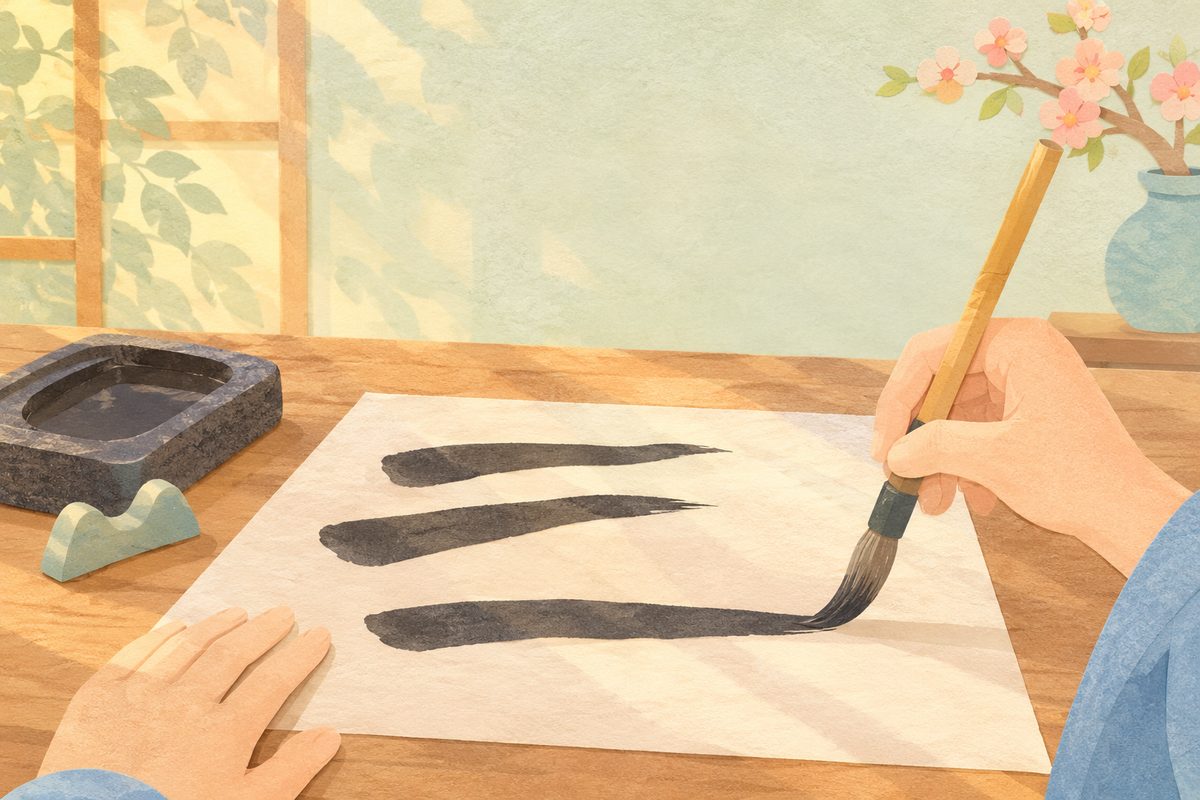
When a child believes their worth rests on being effortlessly "smart", a harder piece of piano music, a new language, or one difficult calligraphy stroke stops being an invitation and becomes a threat. If they have to struggle, or erase a line, they conclude they are no longer smart — and quietly retreat to the tasks where they are sure to shine.
II. Noticing the Brushstroke and the Persistence (工夫と粘り強さに光を当てる言葉)
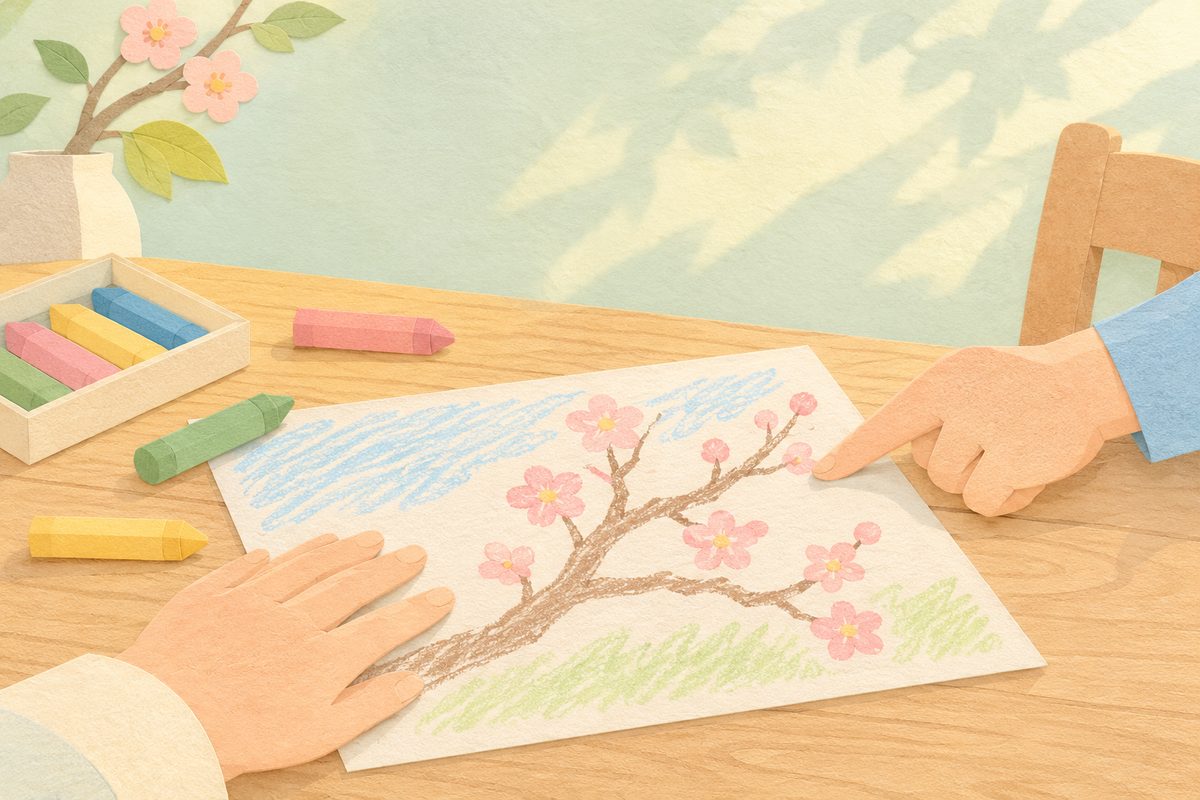
In traditional Japanese calligraphy schools (書道, shodō) and in martial arts halls, a teacher rarely tells a student "you are a genius". More often a finger goes to one corner of the rice paper: "Look at how steadily you held the brush on this last horizontal stroke, compared with last month. Your daily practice is beginning to show."
That small shift — from labelling the person to honouring the process (過程を認める, katei o mitomeru) — changes what happens inside a child. Effort, patience and strategy are things a child holds in their own hands. Marks are not. A child whose watering has been noticed knows exactly what to do after a disappointing test, because the next step is something they have already been doing every day.
III. Teaching Children to Befriend Their Own Winter (花開く前の「冬の時間」を肯定する)
Every learner passes through winter weeks when practice feels slow and no blossom appears on the branch. When those unglamorous afternoons of repetition are met with the same warmth we give to trophy days, children learn the quiet secret of mastery: the person we become while watering the tree outlasts the applause of passersby.
Replacing Labels With a Gardener's Observations (今日から使える「庭師の褒め言葉」)
Today, catch yourself before "Good job!" or "You're so smart!" and offer one specific gardener's observation instead: "I noticed how patient you were when the tower fell twice and you tried a wider base," or "You practised those five kanji for fifteen minutes without stopping — that focus was lovely to watch."
The plum tree does not bloom because a passerby called it beautiful in February. It blooms because someone kept watering it in July.