The Parable of the Two Arrows: When Pain Turns Into Suffering
The parable of the two arrows is an ancient teaching from early Buddhism that explains the difference between pain versus suffering : the first arrow is the unavoidable physical or emotional hurt that life brings, while the second arrow is the self-inflicted suffering we create through rumination, resistance, and harsh judgment. Found in a Buddhist story about overthinking pain, this quiet metaphor shows why a single difficult moment often echoes for days. Life strikes once. Our minds strike a hundred times more. Seeing that second arrow clearly in our own hands is the first step toward setting it down.
I. The Story: The First Strike and the Second Wound (最初の痛みと、重ねられる傷)
More than two thousand five hundred years ago, in the bamboo groves of ancient India, the Buddha offered a teaching preserved in the Sallatha Sutta —often translated as the Discourse on the Arrow. In this original story, he did not speak in abstract philosophy or distant metaphysical riddles. Instead, he spoke of something every human body understands immediately: the sharp, sudden shock of being struck by an arrow.
Imagine walking along a quiet forest path when, out of nowhere, an arrow flies from the shadows and pierces your shoulder. The physical impact is immediate. Skin tears, nerves flare, and heat rushes to the wound. That first strike is raw, undeniable, and completely outside your control.
Then, the Buddha asked his listeners a simple question. What if, moments after being hit, the wounded traveler pulled a second arrow from their own quiver and drove it directly into the exact same wound?
It sounds absurd when pictured in the flesh. Yet in the realm of emotional pain, we do this almost every hour.
A harsh email arrives in the late afternoon. A cherished plan falls apart without warning. A knee aches on a cold morning, or an old friend forgets to call. That initial sting—the disappointment, the physical ache, the sudden flash of grief—is the first arrow. It belongs to the natural conditions of being alive.
The secondary suffering begins seconds later. We replay the conversation in the dark at 2:00 a.m. We ask Why does this always happen to me? or How could I have been so foolish? We layer self-blame , resentment, and catastrophic predictions on top of the original bruise.
The first arrow hurts the body or the heart.
The second arrow poisons the mind.
By the time morning comes, the original event has already passed into history, yet we are exhausted from a dozen arrows we fired at ourselves in the silence of our own bedrooms.
II. Meaning & Nuance: Pulling Out the Second Arrow Is Not Forced Positivity (二本目の矢を抜くことは、感情を消すことではない)
When people first encounter the parable of the two arrows , a quiet misunderstanding often slips in. It is easy to assume that wisdom means feeling nothing at all—wearing an armor of stoic indifference or forcing a bright smile over a genuine wound.
Modern wellness culture sometimes turns ancient wisdom into another form of pressure. If we feel sad after a loss, or anxious before an uncertain change, we might scold ourselves for "shooting the second arrow." Ironically, feeling guilty about feeling sad is just a third arrow disguised as spiritual progress.
The Buddha never said the wise person feels no pain. In the Sallatha Sutta , even an awakened person still feels the first arrow completely. When the body falls ill, it aches. When someone we love leaves, the chest feels hollow. When a season of work collapses, fatigue settles into the bones.
Grief is not a mistake.
To put down the second arrow is not to practice toxic positivity or deny our human vulnerability. Quite the opposite: it means allowing ourselves to feel the first arrow cleanly, without adding the courtroom drama of self-punishment. When we stop arguing with the fact that we are hurting, the raw sensation of the first arrow actually has room to breathe, soften, and eventually heal. We do not need to pretend the rain is sunshine. We simply stop blaming ourselves for getting wet.
III. Japanese Thought: Mono no Aware, Wabi-Sabi, and the Space Between (物の哀れ、侘び寂び、そして「間」)
When this early Buddhist teaching traveled eastward and took root in Japan, it blended naturally with native sensibilities about impermanence and quiet observation. In Japanese aesthetics, there is no demand to conquer sorrow through sheer willpower. Instead, there is Mono no aware (物の哀れ)—often described as a gentle, bittersweet sensitivity to the passing of things.
Under the lens of Mono no aware , the first arrow is simply the texture of an impermanent world. Cherry blossoms scatter in the spring rain; autumn maples turn brittle and fall; human relationships shift with time. Feeling a quiet ache at these changes is not a flaw in our character. It is proof that we have paid attention and cared deeply.
Alongside this sensitivity sits Wabi-sabi (侘び寂び), the quiet acceptance of imperfection, weathering, and incompleteness. A cracked ceramic tea bowl is not thrown away in anger, nor do we pretend the crack is invisible. It is held as it is, scarred and whole at once.
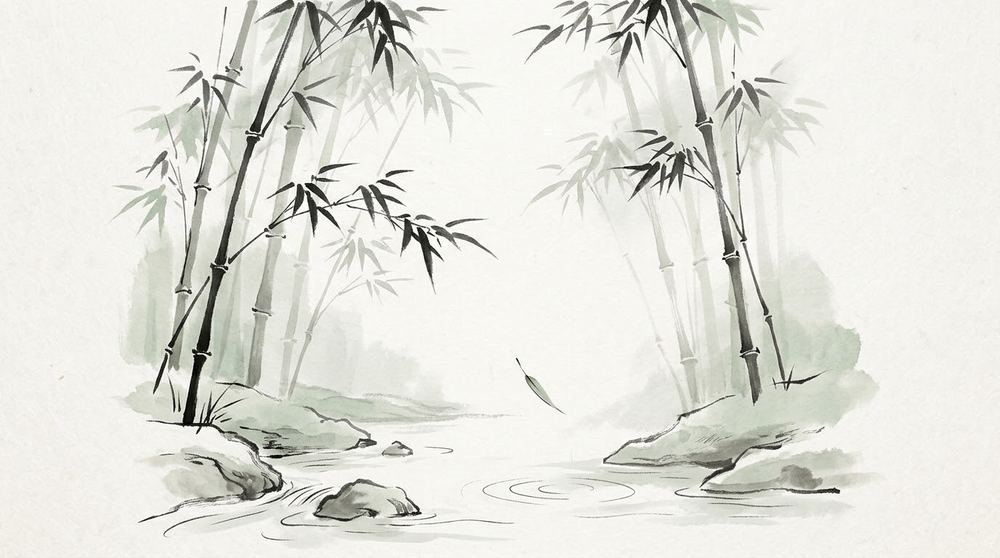
What keeps the first arrow from multiplying into the second is Ma (間)—the intentional pause, the breathing space between one moment and the next. In traditional ink painting, the unpainted white paper is not empty nothingness; it is the space that allows the bamboo stalks to stand clearly. In the human heart, Ma is the three seconds between feeling a sharp sting of rejection and launching into a story of personal failure.
Between the sting and the story, a quiet gap waits.
Inside that gap, the hand holding the second arrow can slowly open.
IV. In Daily Life: Practicing a Quiet Response (静かな実践として)
Knowing the metaphor in theory is effortless while reading in a calm room. Living it when our pulse quickens and our pride feels bruised is much quieter, humbler work.
Consider an ordinary Tuesday evening. You realize you made a careless mistake on a project at work, or spoke too sharply to someone you care about over dinner. Immediately, the first arrow lands: a tight knot in the stomach, a warm flush across the neck, the honest regret of having fallen short.
Within moments, the familiar inner narrator wakes up. You always ruin things. Everyone noticed. Next week will be a disaster.
Instead of fighting that voice or trying to force instant cheerfulness, try a practice of non-attachment and tactile grounding:
- Name the two arrows aloud or on paper: Take a plain sheet of paper and draw a single line down the middle. On the left, write only the bare fact of the first arrow ( "I missed the deadline by four hours" ). On the right, write the stories of the second arrow ( "I am unreliable and my career is stalling" ). Seeing the ink on paper separates the actual wound from the mental echo.
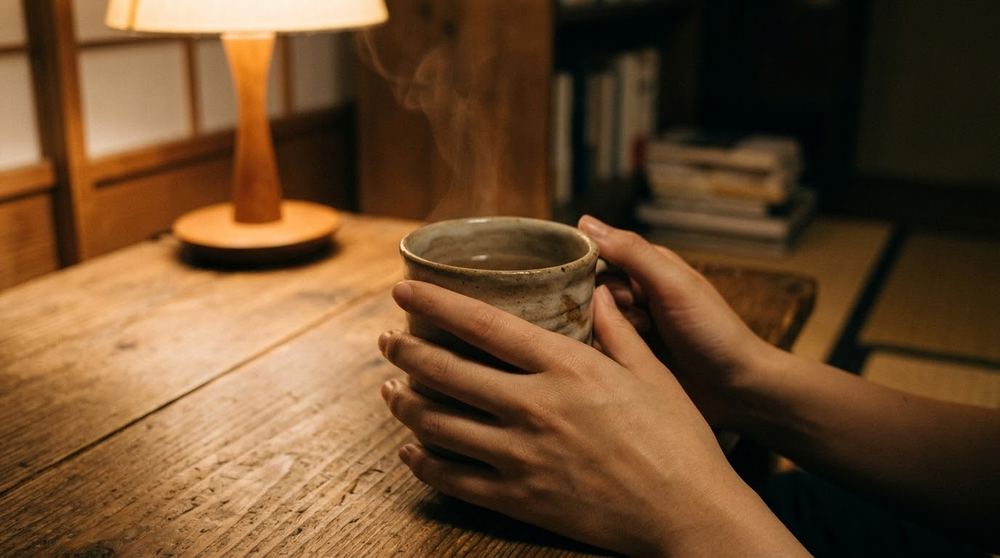
- Return to a single physical anchor: Step away from the glowing screen. Pour hot water into a heavy stoneware cup, or wash your hands slowly in cool water. Notice the weight of the ceramic, the rising steam, the sound of rain or distant traffic outside the window. Physical sensations belong only to the present moment; rumination requires an imagined past or future to survive.
- Offer a mindful response of self-compassion: Place a hand lightly over your sternum or wrap both palms around a warm cup of tea. Practice meeting anxiety with gentleness rather than interrogation. Acknowledge the hurt as you would for a tired friend sitting across the table: This hurts right now, and that is understandable. I do not need to add another wound tonight.
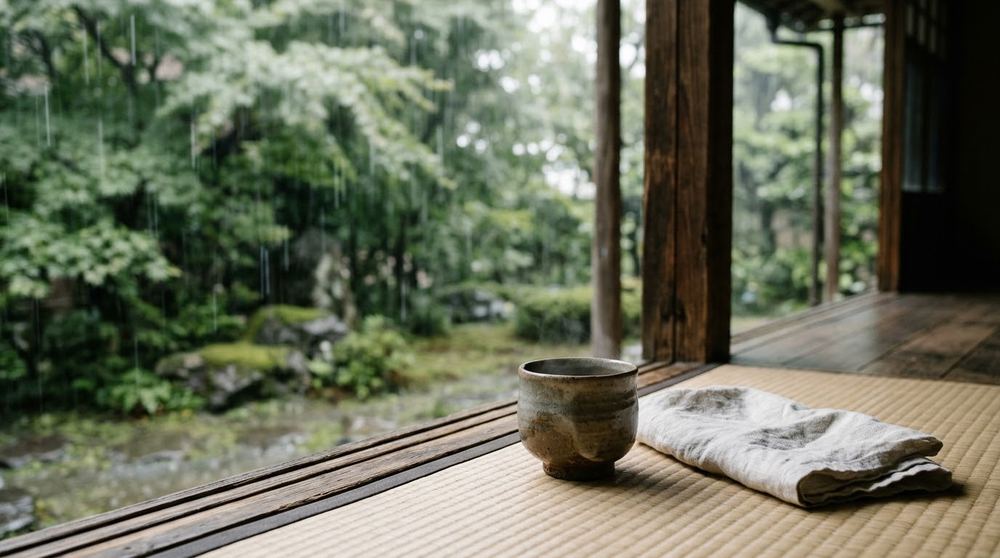
The rain continues outside.
The tea grows warm in your palms.
By practicing self-compassion , we do not erase the responsibilities of tomorrow. If a mistake needs repairing, we will repair it clearly in the morning light. Yet we spare ourselves the midnight trial where we act as both prosecutor and prisoner.
V. A Quiet Takeaway
“Pain is the arrow that life shoots out of the dark; suffering is the arrow we carve from our own regrets and press into the wound.”
Reflection Question: When you look closely at the heaviness you have been carrying this week, how much of it is the original first arrow—and how much is a second arrow that your hands are finally ready to set down?